
Saving clothes from the landfill—one pair of jeans at a time
Stepping into the Clothes Closet on campus—where racks of winter coats, jeans, sweaters and shirts are neatly displayed—students can discover any number of new wardrobe items for free.
Thanks to the work of students from the Black Student Alliance (BSA) and students completing their sustainability minors, the Clothes Closet in the Center for Diversity (Sisson Hall 233) has been transformed into a thoughtfully organized resource that meets the needs of their classmates.
“Sustainability isn’t just the simple things—recycle your own stuff, throw out your garbage—it’s having a culture where people want to do what’s right, people want to push for this better system—like what we’re doing here with the Clothes Closet."
Sustainability minor
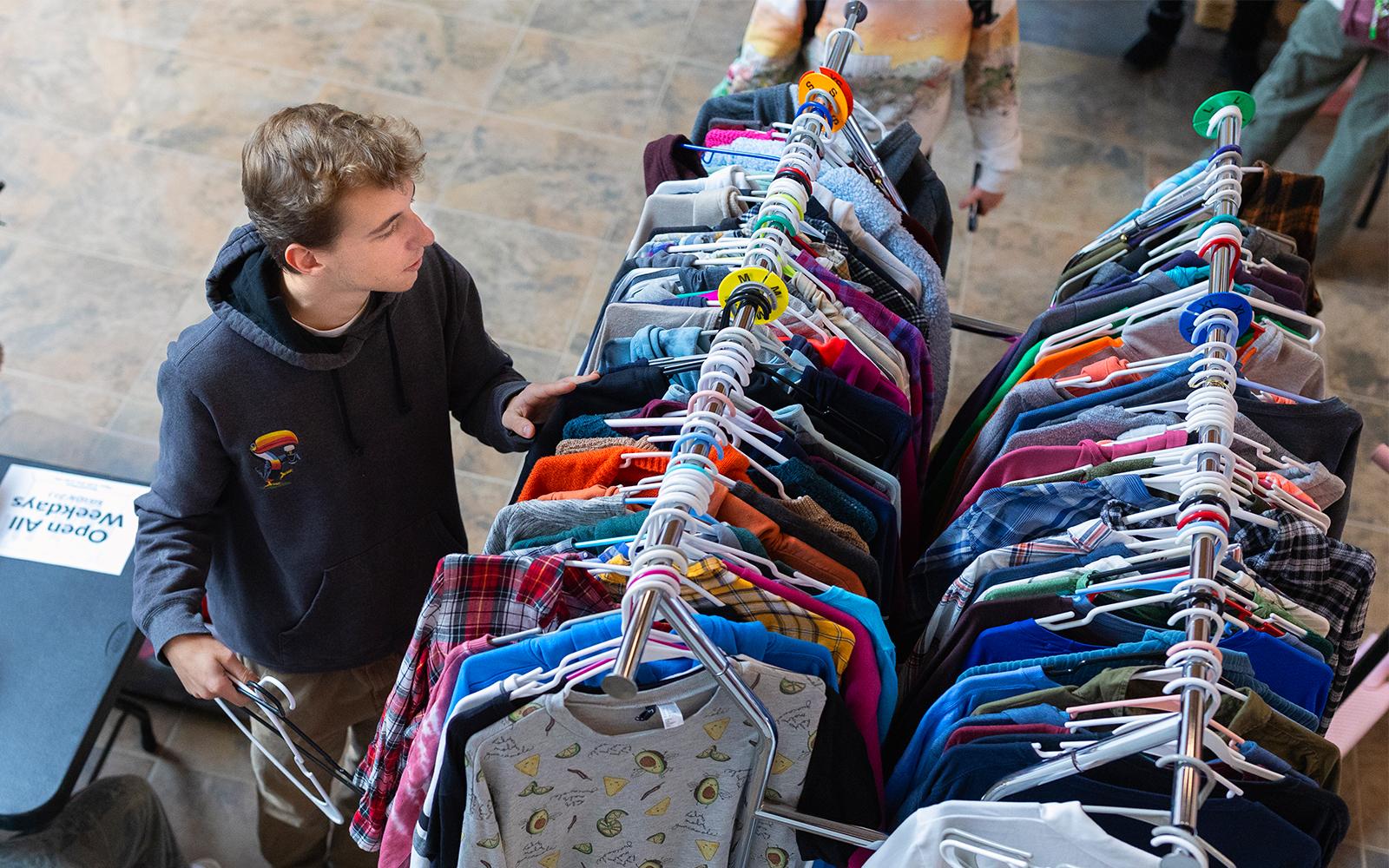
First developed by members of the Center for Diversity (CFD), the Clothes Closet has continued to divert clothing destined for the landfill into the hands of students on campus.
“When we first started, it was just a room that had clothes scattered everywhere, there was no organization and there were no shelves,” said Shawn Cook-Ramos, director for the CFD. “A lot of the clothes have been donated by faculty and staff throughout the year, and then there’s a big student push at the end of each semester as they’re packing up and moving home.”
During the Spring 2025 semester, former student Destiny Guinnee helped transform the clothes closet into what it is today. A work study student at the CFD, she would come in to work even outside of her scheduled hours, whenever a new idea popped into her head to improve the space.
“She had an organizational system like no other,” Ramos said.
This semester Kiara Burgess ’28, Clad Sanon ’27, Luis Tito ’26 and Tyler Gould ’26 have taken the reins and continued to improve the Clothes Closet.
“This is an amazing resource. Things are expensive, especially for college students, and some students may not be from the best financial background, so this space is a good way for people to get free clothes."
BSA member & work study student at the CFD
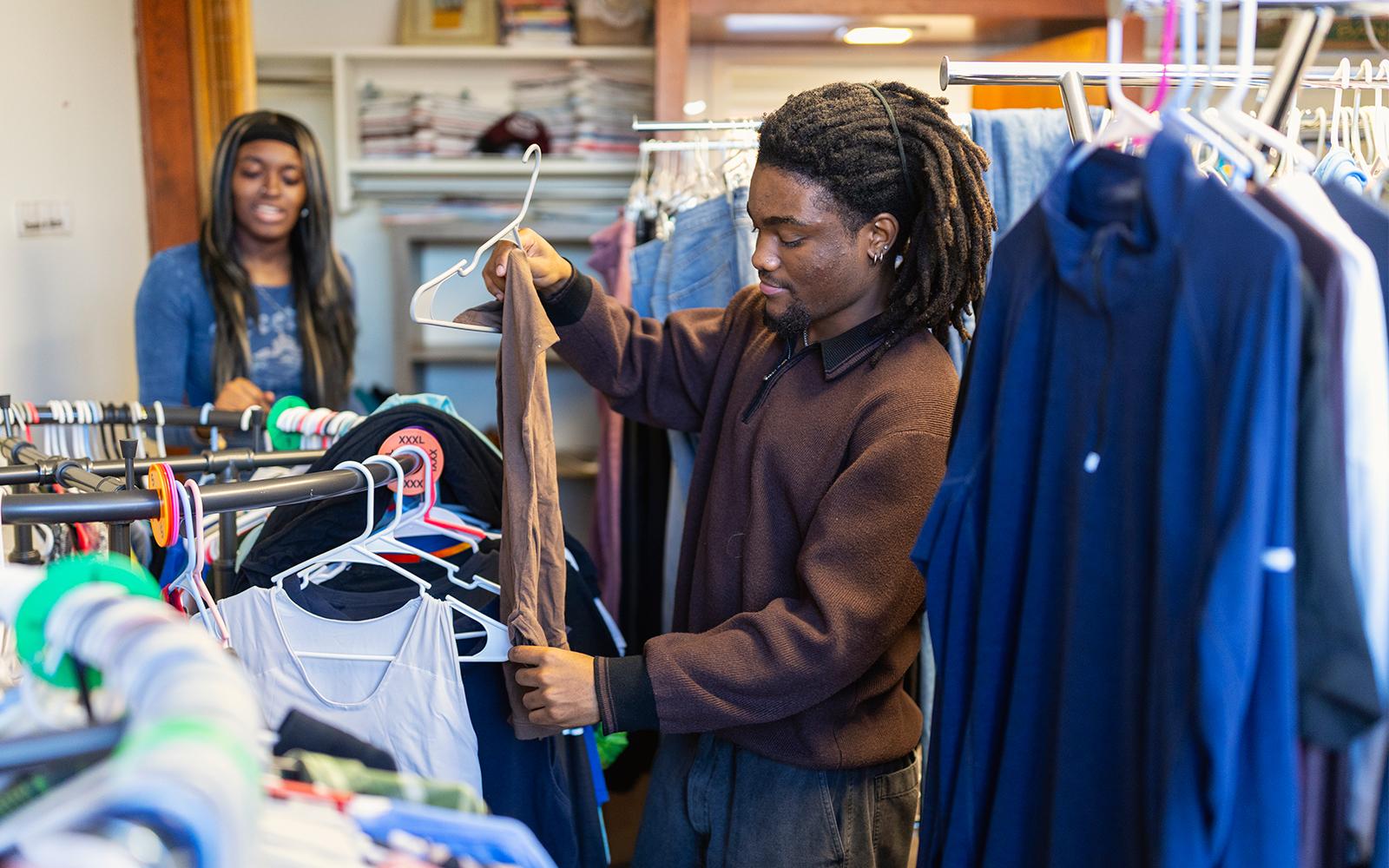
For Burgess, who loves fashion and thrifting, the clothes closet has become an outlet for her to showcase her skills. Pulling one garment after another from the sorting room bins, she curates a collection of garments perfectly suited to the needs of her classmates.
“Based on my style, and what I think people would want to wear, that’s how I decipher what to put in the closet. Back at home, I thrift a lot, so I thought this would be the perfect job for me, to help students on campus with sustainability, and I get clothes from here as well," said Kiara Burgess '28, a BSA member working for the CFD.
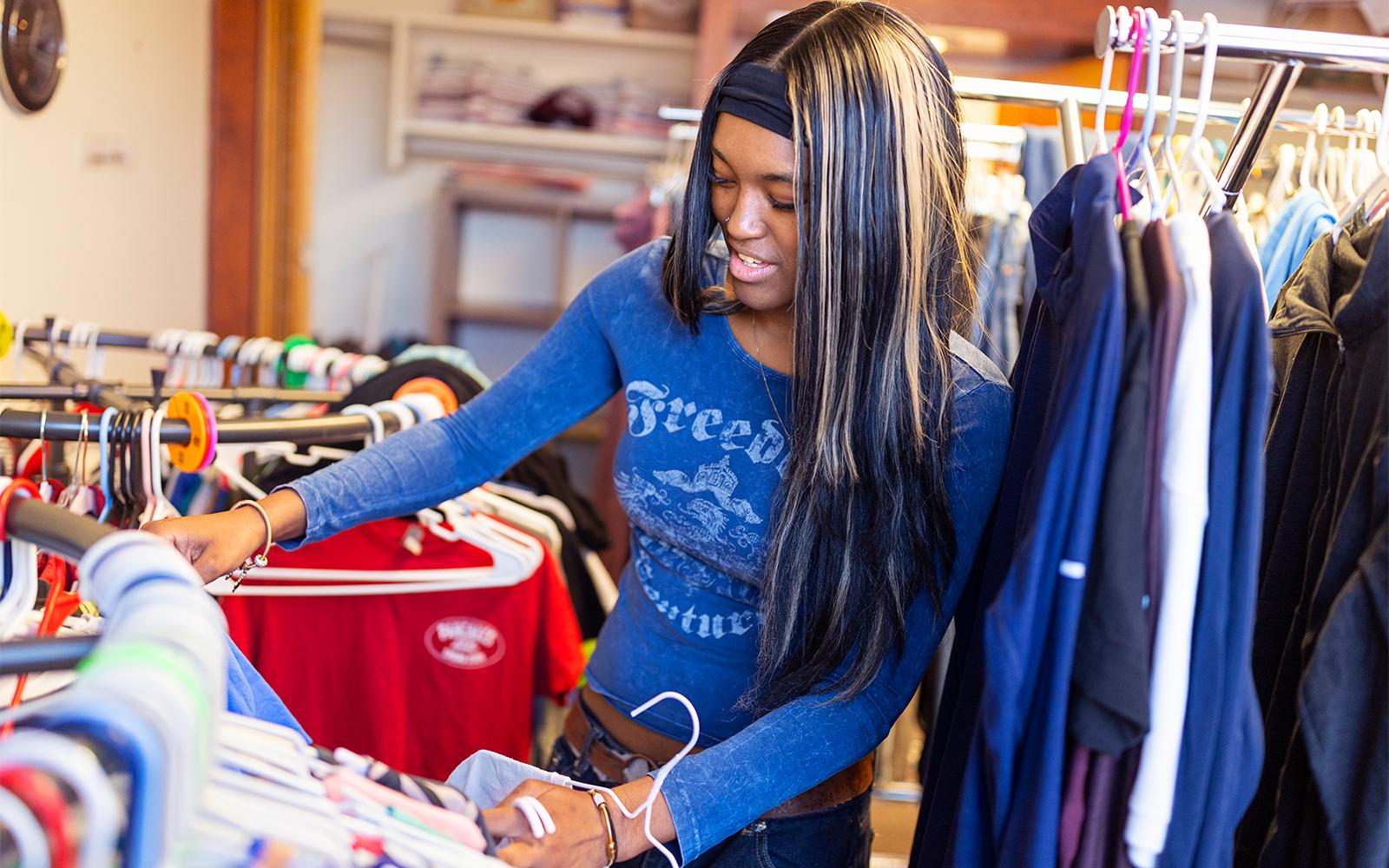
Kiara Burgess organizes the racks in the Clothes Closet.
Last year, a shortage of winter gear—jackets, hats, gloves and scarves—sparked a campus-wide clothing drive in the Barrington Student Union. Now, as temperatures drop across the North Country, students have a reliable, free resource to keep them warm on their walks to class.
“We’re making sure the clothes and items we have fit the needs of students. Potsdam is going to be cold and snowy. I’m the kind of person who is fine going outside in a sweater, but not everyone is like that. So, if someone doesn’t have a jacket, they at least have a place to come look now,” Ramos said.
Sustainable Approach
Thanks to a new partnership this semester, two students completing minors in sustainability have joined the cause. Luis Tito ’26 and Tyler Gould ’26, both business majors with minors in sustainability, have also been helping to transform a chaotic scene into a fully functioning system.
“If had to guess, there were over five to six tons of clothes in bags that we sorted through, into different categories,” Tito said. “Anybody can stop by, grab anything they need, and be on their way. You don’t have to sign any papers or scan any QR codes, just walk in, take clothes, and leave.”
Clothing donations have continued to pour in over the past year, with a significant influx arriving during a “freecycle” event at the end of the academic year, where bins are placed at seven residence halls for students and their families to donate unwanted clothing, kitchen supplies, bedding, office supplies, toiletries, and appliances as they move out.
“We had a big decrease in the [trash] bill just from move-out time last year. We think a lot of it is the culture that we’re building on campus,” Gould explained. “I’m also a business major, so for me it’s interesting seeing the financial side of it also. Obviously, the planet, recycling and reusing are important, but seeing the impact that it can have financially is pretty cool to me.”
Sustainability minor
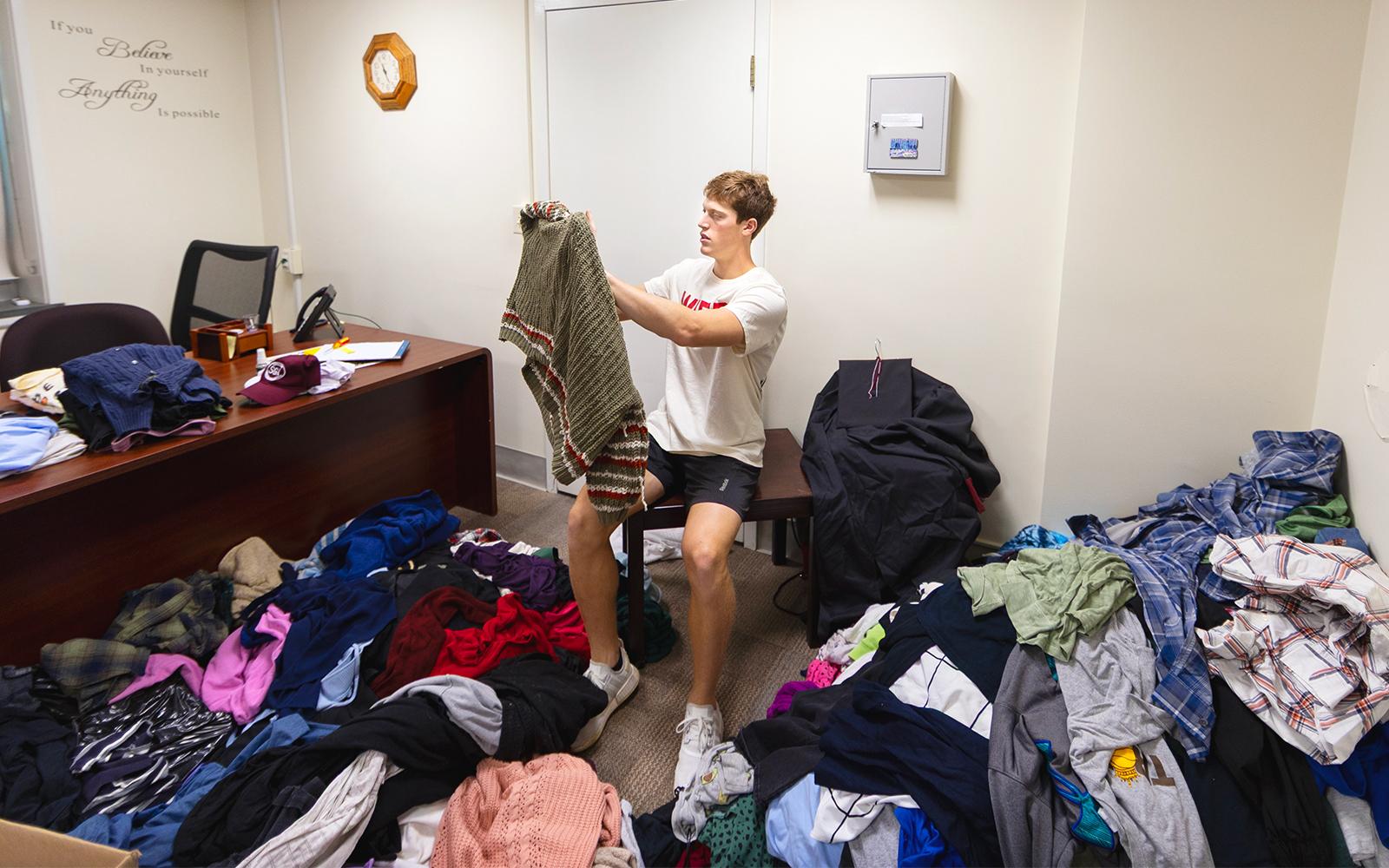
Tyler Gould '26 organizes clothes in a sorting room in Sisson Hall. (Photo by Sophia Pleat '26)
That growing culture of reuse aligns with the core principles taught by Dr. Jessica Pearson in her sustainability courses. Last year, her students completed a hands-on capstone project transforming how the dining halls manage food waste. Their collaboration with Whitten Family Farms launched a major composting initiative that has kept tons of waste out of the landfill.
“It’s been great working with the applied sustainability students each semester. Their enthusiasm to try to make lasting change across our campus, even in small increments keeps me motivated,” Pearson said. “Seeing Tyler and Luis go through the bills from our campus waste company to figure out if composting is saving us money (it is!) and how much the Spring 2025 Freecycle diverted from the landfill helps our campus plan for long-term sustainability.”
In late November, Tito and Gould and Environment and Sustainability majors Nick Soles ’26 and Ethan Davis ’26 set up a free clothes pop-up in the Barrington Student Union. The four students wheeled racks and carried bins of clothes through the interconnected hallways between Sisson and the Union for their outreach event.
“We wanted it to be a quick way for people to pass through the Union, see what we have going on, and maybe attract more people to go to the Clothes Closet,” Tito said.
Students flocked to the pop-up, checking tags and holding up shirts and jeans for quick fit checks as they hunted for their next wardrobe addition. The event also served as a reminder that the Clothes Closet is available year-round to anyone looking to refresh their wardrobe sustainably.
“The Clothes Closet really does the opposite of Fast fashion, where you’re buying stuff and throwing it out every other month when it’s no longer in style,” Gould said. “I go to thrift stores and get a lot of my clothes. I also sew, and sometimes I get stuff that I know I’m not going to wear, but I can do something with it. I’ve combined two hoodies before, and I made my backpack out of thrifted jeans,”
Now seniors, Tito and Gould have woven their business majors and sustainability minors into a unified set of values they plan to carry into their careers. After Tito walks across the commencement stage in May, he hopes to pursue a career in hotel management.
“With tourism, sustainability has been huge. Within the next 20 to 30 years, you’ll start seeing corporations valuing sustainability a lot more as well,” Tito said. “All these industries now have to meet certain requirements around their carbon footprint, so I plan on using my skills from the sustainability minor to help push that forward in the hospitality world.”
The ongoing evolution of the Clothes Closet shows what’s possible when students take the lead in solving real challenges on campus. The work of Sanon, Burgess, Tito and Gould—and their care and commitment—have transformed a simple idea into a thriving resource. In the process, they’re modeling the kind of practical sustainability that will follow them long after graduation.
Article by Jason Hunter. Photos by Sophia Pleat ’26 & Jason Hunter