
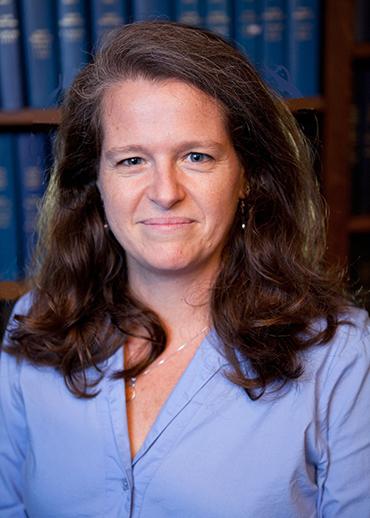
Celeste Maire Gagnon serves as the Dean of the School of Arts and Sciences. She is dedicated to innovative and interdisciplinary curricular programs that are student-centered, experiential-focused, and integrate a wide variety of communities, across and beyond campus.
Dr. Gagnon joined SUNY Potsdam after serving for 18 years at Wagner College, where she was the inaugural chair of the Division of Social and Behavioral Sciences. Before taking on this role, she was professor of anthropology, teaching in anthropology, environmental studies, health sciences, and first-year programs. She was the first woman to hold the Megerle Endowed Chair in Science. Dr. Gagnon was also active in faculty co-governance, serving on the Faculty Personnel and Academic Review Committees, and as Coordinator of the innovative Intermediate Learning Community Program.
Dr. Gagnon has connected campus to community. Her first-year program courses brought undergraduate students into local minority-majority public schools, working with 4th grade students to explore the culture and health and food choices, and with high school students creating near-peer mentoring for scientific research and information literacy. In spring of 2025 she and Dr. Sara J. Scott, together with students, community partners, and supported by a Mellon Foundation Periclean Faculty Leadership grant, hosted the participatory exhibit Hostile Terrain 94.
Dr. Gagnon earned her Ph.D. at the University of North Carolina-Chapel Hill, her Master of Arts degree at Arizona State University and her Bachelor of Arts degree at the University of Delaware. Trained in biocultural anthropology and archaeology, her scholarship employs method and theory from social sciences, natural sciences and humanistic perspectives to investigate the effects of economic and sociopolitical change on human health and diet.
In support of this research, Dr. Gagnon partnered with MOCHE Inc., a not-for-profit organization that developed community-engaged archaeological projects in Peru. These projects brought undergraduates into the field to work directly with members of the rural communities in which the archaeological sites under investigation were located. Projects varied from the construction of potable water systems, composting latrines, ventilated wood cooking stoves, constructing school buildings, and sponsoring fairs that brought a range of healthcare professionals to rural villages to provide care. Through this work, MOCHE Inc. supported the creation of village-level community groups that served community needs.