
Potsdam alumna melds artistic and technical learning worlds
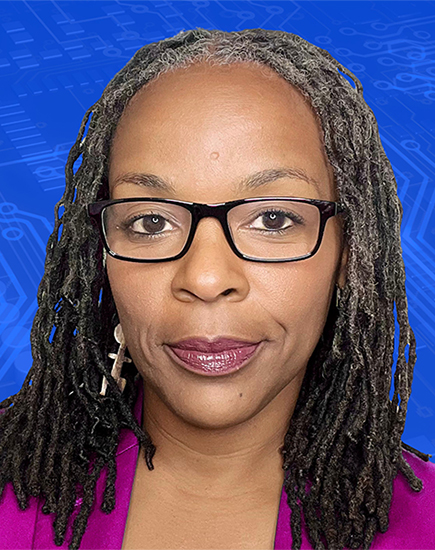
Since graduating from SUNY Potsdam, Thembi Duncan ’24 has been busy merging her longstanding passion for theater with emerging technology and methods of instruction—bringing heart and creative breadth to educational delivery.
A graduate of Potsdam’s fully online Master of Science in Instructional Design and Educational Technology program, Duncan went on to serve as the interim executive director of the African American Cultural Center in Buffalo and as an adjunct assistant professor of dramatic arts at D’Youville University, where she directed professional productions—all while successfully hosting and producing The KeyBARD podcast, fostering conversations that push boundaries where art, education and technology synergize.
Offered through SUNY Potsdam’s Department of Business Administration, the IDET program’s flexible format and rolling admissions allowed Duncan to complete her degree while living in Buffalo. She found her way to the program by following her interest in a master’s degree that would help her create meaningful remote learning experiences.
“I was seasoned in my career as a theater practitioner, educator, and arts administrator when I enrolled at Potsdam,” Duncan said. “Returning to school in my late 40’s while working full time was challenging, as one might expect, so after some stops and starts, I decided to stop working full-time so that I could focus on school.”
The well-established IDET program was offered remotely the year before Duncan enrolled, making it the perfect fit.
“The program was exceptionally well-rounded, and the faculty are phenomenal. But Dr. Anthony Betrus and Dr. Karen Caldwell were the standouts for me because they led me to reshape my thinking about how adults learn and how technology impacts society. It’s not hyperbole to say that they changed my life.”
Theater and instructional design now energize each other in Duncan’s career and creative arc. She worked for years with Buffalo Police Department cadets on de-escalation using theater-based training centered on character, relationship, objectives and tactics and decided she needed to deepen and formalize her grasp of instructional design to better understand the impact of the training.
“Theater and instructional design very much connect and inform each other in my world,” Duncan said. “As a teaching artist and educator, I wanted to continue growing and evolving in my practice. I discovered that acting, dramaturgy, scene study and script analysis are great teaching tools—and I've used them for many years. Putting theater in the classroom has proven valuable and effective for me.”
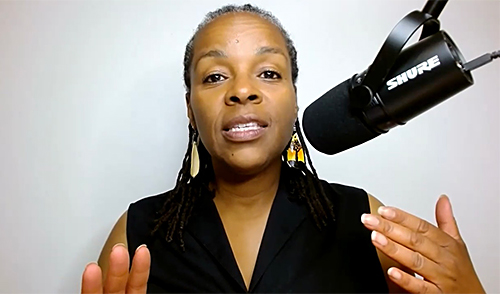
In her latest podcast, Duncan sits down with actor, writer, composer and educator Lee Summers, exploring Black music, storytelling and creative legacy—among a long lineup of thoughtful conversations with artists, educators and technology innovators. Her interview with performer and educator Paige Hernandez delves into multidisciplinary performance and ways theater, music and dance can energize classroom learning.
“I'm proud of how KeyBARD started at Potsdam in a class with Dr. Betrus,” Duncan said. “He even introduced me to one of my first guests, Dr. Charles Reigeluth, who I ended up producing another podcast with, called The Education Crisis: What it Is, and How to Fix It.”
At the root of education—freedom
A grounded but free childhood in Maryland left doors and windows open for dreaming, self-expression, intelligent conversation and the chance for Duncan to pursue her interests without a sense of being limited. During childhood, she attended a broadcast development program at the National Children’s Museum in Washington, D.C. and served as editor of a local hip-hop newspaper—ventures which became the root of her podcasting and theater interests.
“Books, music, and art surrounded me in my childhood home, so I was never short on information and inspiration,’ she recalled. “I was an avid reader with a vivid imagination, and I never shied away from sharing my opinions, solicited or not.”
At the end of the day, Duncan draws on the concepts and instructional design principals of theater and merges them with other learning in ways that build a connective throughline from people to their communities, local to global. With approaches that are innovative and supported by research, “I believe that we can deepen our collective empathy and understanding, opening greater possibilities and evolving toward a society where everyone can feel valued and be free,” she said.
Article by Bret Yager