
Repopulating the Adirondacks
After a grueling drive from a remote region of Ontario, Canada, SUNY Potsdam alumna Angie Ross ’02 crosses the U.S. border with boxes of Canadian spruce grouse destined for the heart of the Adirondacks.
Arriving in Paul Smiths, N.Y., she steps out of the van, catches her breath, and heads deeper into the lowland boreal forest. With the birds in tow, she ducks under branches and steps over logs, while carefully selecting the optimal location to release the spruce grouse into the woods.
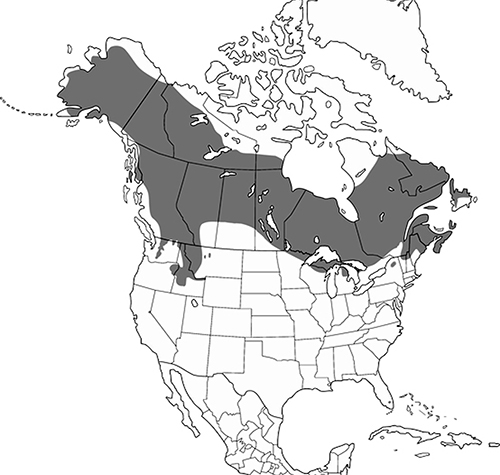
The massive 13-year Spruce Grouse Translocation Program—a collaboration between the Department of Environmental Conservation (DEC) and SUNY Potsdam—has focused on addressing concerns over declining spruce grouse populations in the Adirondacks, and improving the genetic diversity of the species.
“We started the translocation project in 2013 as a pilot to see how doable it was to go to Canada and get birds. Since then, we have translocated 363 adults and 711 chicks, mostly from Canada, but we did five trips to Maine as well,” said Dr. Glenn Johnson, a professor at SUNY Potsdam helping to oversee the project.
Spruce grouse are unique birds that thrive in areas with dense blueberry shrubs and young spruce-fir stands (under 45 years old), habitats that also sustain other boreal species, such as the Cape May Warbler and the American Three-toed Woodpecker. The declining population numbers were a concern not only for the species but for the forest in general.
“Spruce grouse are a bellwether of the health of boreal forests,” Ross said. “They are also really cool. They eat needles, and they’re converting these needles into energy by growing and making meat for other species to eat, like hawks. Everything is connected to one another in an ecosystem in a food web.”
Decades of Conservation in Action
Spruce grouse have been listed as endangered in New York since 1999, and that same year, Dr. Johnson decided to invest his time and resources into researching the species. As a brand-new faculty member at the College, he quickly got to work conducting population surveys, building partnerships with the DEC, and securing grant funding to hire students to assist with the project.
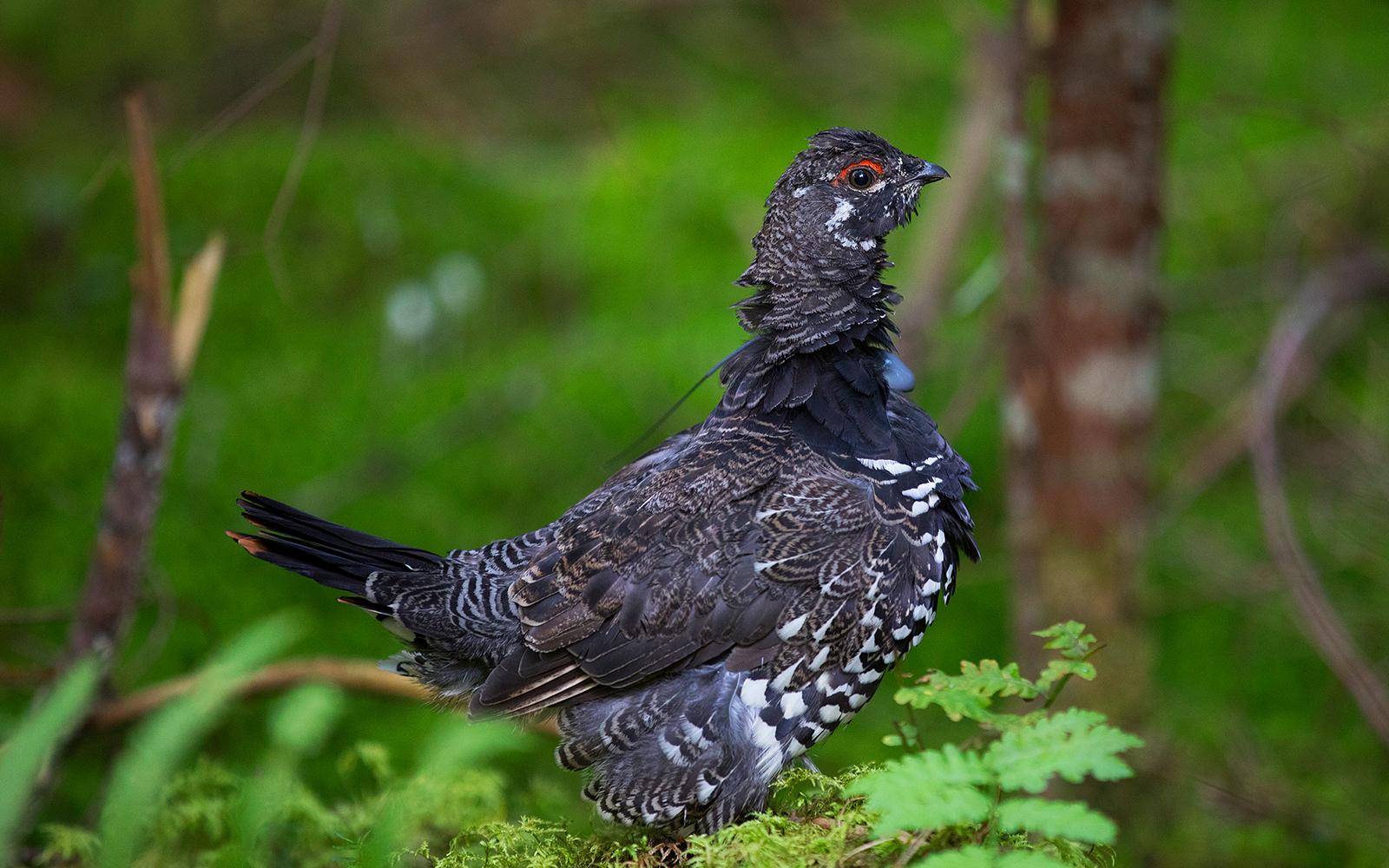
A spruce grouse fitted with a radio transmitter after arriving in the Adirondacks.
The following year, Johnson hired Ross—one of his biology students—to help advance the research. Now, 26 years later, Ross has parlayed those early hands-on experiences into a dynamic career with the DEC, while also earning her master’s degree in Wildlife Conservation from SUNY ESF and a Ph.D. from Clarkson University in Interdisciplinary Bioscience and Biotechnology. She now serves as the Avian and Mammal Diversity Unit Leader for the DEC.
Capturing and relocating hundreds of elusive spruce grouse from remote regions of Ontario to the Adirondacks was a significant undertaking. Each year, Johnson, Ross, DEC staff, SUNY Potsdam students, and DEC Fish and Wildlife Technicians traveled north to capture and safely transport the birds hundreds of miles, across the border and into the Adirondacks.
"We have learned that spruce grouse do quite well being transported to release sites and translocated birds move in similar ways to resident, NY-origin spruce grouse," Ross said. "Moreover, translocated spruce grouse have similar percentages of nesting attempts and nest success, similar numbers of young per female, and individuals move within New York’s landscape in a similar fashion to resident spruce grouse."
For many years, the translocated adult birds were fitted with radio transmitters to track their movements after release—work that formed the foundation of Ross’ graduate research. Shortly before the COVID-19 pandemic, the team concluded the telemetry phase and shifted to conducting occupancy surveys across the Adirondacks. During the summer of 2025, they transported their final 50 spruce grouse to the region from Canada and Maine.
After releasing more than 1,000 new spruce grouse into the Adirondacks over the years of the project, the ecosystem has been strengthened by increasing the number of spruce grouse that will find each other and breed—helping to improve the species' genetic diversity. This would not have been possible without the collaborative work between SUNY Potsdam and the DEC.
"We are excited to see a couple of formerly occupied spruce grouse sites begin to have spruce grouse visitation again. We will continue to monitor the spruce grouse population to identify whether it is beginning to trend upward," Ross said. "Continuing our monitoring will tell us more about whether this recovery program has been successful in the coming years. We will also be working with private landowners to manage additional areas to promote spruce grouse persistence in the Adirondacks into the future."
Looking Ahead
After decades of dedicated work on the spruce grouse project and extensive research focused on conserving the Blanding’s turtle, Johnson will leave behind a lasting legacy at SUNY Potsdam when he retires later this year. Known for emphasizing applied learning and creating meaningful research opportunities for undergraduates, the esteemed professor will pass the torch to a new generation of scientists working to protect endangered species in the region.
“I have involved undergraduates in every project I have worked on. These folks have been the engine on the projects, and I could not have started, much less completed, any of them without students, some of whom, like Angie, became alums and continued working on some aspect of the projects,” he said.
Despite his retirement, the spruce grouse project will continue in force, with Johnson remaining involved in an advisory role. During his final semester at the College, he has shown no signs of slowing down, recently submitting a proposal to track map turtles in the St. Lawrence River with one of his students.
“As important as the actual accomplishments, the experience students get while participating is invaluable. For some, it can lead to new career paths and for other, the skills they learn are useful to other occupations such as teaching,” Johnson said.
That trajectory—from being a student at SUNY Potsdam to a professional biologist working in the field—is perhaps best exemplified by Ross and the work she continues to lead with the DEC.
"I’m grateful to have been provided the opportunity for hands-on field experience in wildlife during my studies at SUNY Potsdam," Ross said. "That experience was worth far more than any classwork I could have taken and set me up to be successful in graduate school and in my career at DEC."
Article by Jason Hunter / photos by Jason Hunter & Angie Ross