
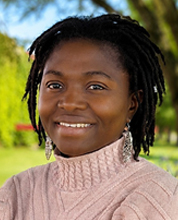
Faculty Bio
Dr. Bridget Amulike is an Assistant Professor of Biology whose research focuses on wildlife ecology, biodiversity conservation, wildlife population dynamics, species distribution modeling, species interactions, and the role of human dimensions in wildlife conservation. Her current research investigates Sandhill Crane migration ecology in northern New York through field-based ecological surveys and habitat assessments. In addition to her work in North America, Dr. Amulike conducts research in East African tropical ecosystems focused on assessing the biodiversity of Katavi National Park and the surrounding landscapes in western Tanzania.
Project Description
Sandhill Cranes (Antigone canadensis) have recently re-established breeding and migratory populations across northern New York, representing an important ecological shift in the region. Their expansion may reflect responses to changing wetland availability, land use, agricultural landscapes, and climate variability, while also influencing wetland ecosystem dynamics, biodiversity patterns, and human-wildlife interactions. Understanding these changes is important for informing wetland conservation, wildlife management, and broader efforts to understand species responses to environmental change.
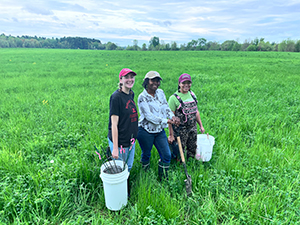
This project investigates Sandhill Crane distribution and habitat associations across wetland and open field habitats in northern New York. Using field based ecological surveys, habitat assessments, and environmental DNA sampling, the study examines how cranes use these landscape mosaics and the ecological communities associated with them. Amphibians, invertebrates, fish and plants are among the ecological communities being assessed to evaluate potential food resources for the cranes. Future phases of the project may include incorporating local ecological knowledge through questionnaires with landowners and community members to better understand crane distribution, habitat use, and human wildlife interactions across the landscape. Additional work may investigate migratory connectivity using tracking technologies, assess how landscape and anthropogenic features influence movement patterns, and develop species distribution models to evaluate how climate change could affect current and future crane distributions.
Findings from this research will contribute to a broader understanding of how species respond to environmental change and provide insight into the potential for future human wildlife interactions as Sandhill Crane populations continue to expand across rural landscapes.
"This research is rewarding because it combines discovery, conservation and education. Every field season provides an opportunity to learn something new about the natural world while inspiring students to become active participants in science."
Assistant Professor of Biology
Students
- Mackenzie Benjamin
- Jasmine Crump
Questions?
Students interested in participating in any of these projects can contact Dr. Bridget Amulike.