
SUNY Potsdam Professors Dr. Page Quinton and Dr. Michael Rygel Awarded $411,477 from National Science Foundation to Further Research on Devonian-Permian Sedimentary Rocks
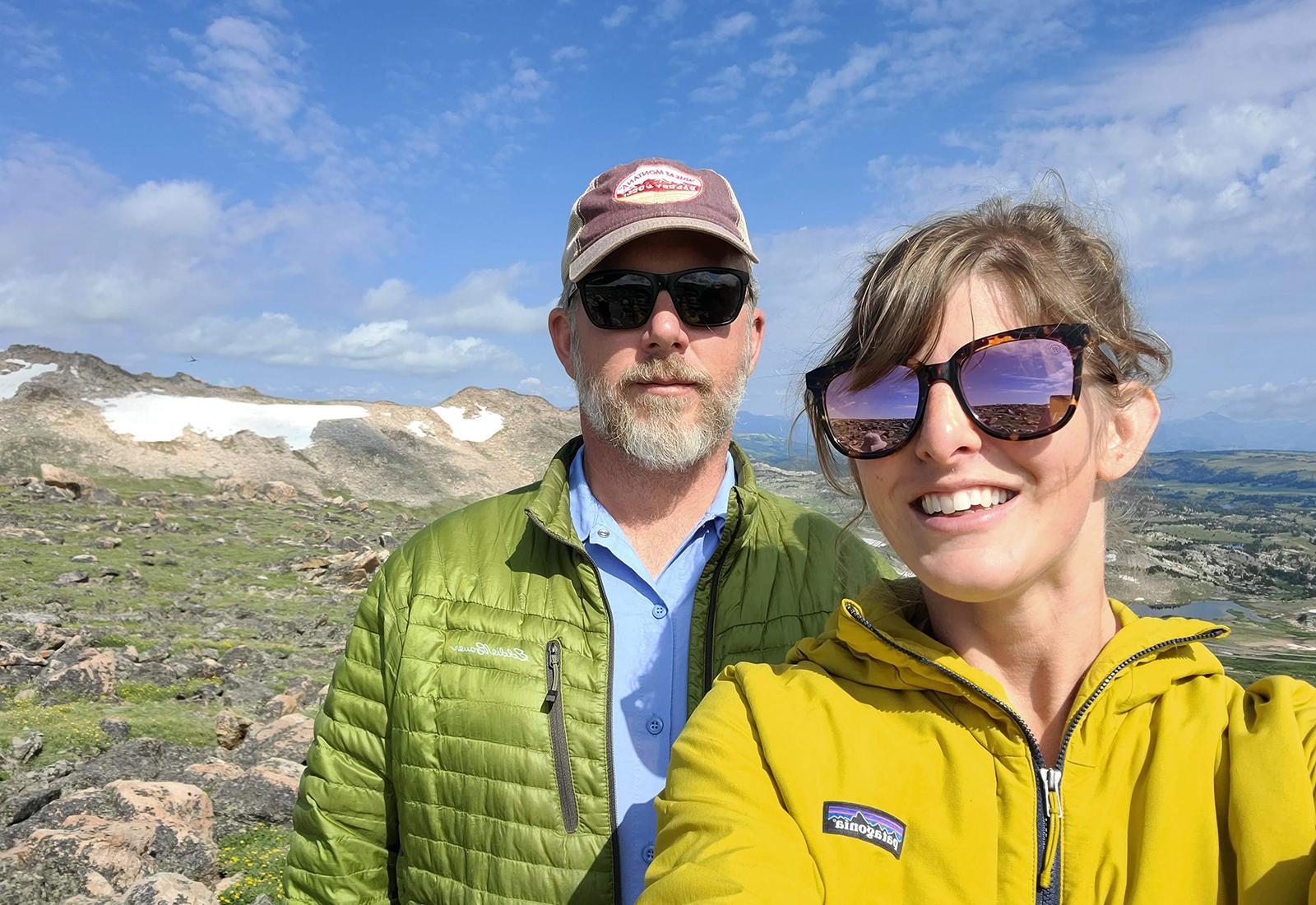
Seen here placing minerals in the Geology Museum displays at SUNY Potsdam, Dr. Michael Rygel (left) and Dr. Page Quinton (right) were recently awarded a new grant from the National Science Foundation to support their research on the salinity of ancient sedimentary rocks.
Two SUNY Potsdam geoscientists have been awarded a National Science Foundation grant to investigate the chemistry of ancient waters preserved in sedimentary rocks across Atlantic Canada, research that could shed new light on the evolution of life on land and the distribution of energy and mineral resources.
Dr. Page Quinton and Dr. Michael Rygel, faculty members in SUNY Potsdam’s Department of Earth and Environmental Sciences, were recently awarded $411,477 from the NSF for their project, "Salinity, Source Rocks, and Cyclothems: Using Paleosalinity Proxies to Track Marine Influence in the Maritimes Basin.” This three-year project will provide paid research experiences for SUNY Potsdam undergraduates and will involve field work in Nova Scotia, New Brunswick, Prince Edward Island and Newfoundland.
Learn more: Earth and Environmental Sciences at SUNY Potsdam
“Beyond its pure scientific value, gaining a better understanding of the chemistry of these ancient waters could potentially improve our understanding of the distribution of energy and mineral resources in this part of the world,” Quinton said. “The techniques are new, and our background and expertise make us uniquely well qualified to do this work. Many of these rocks are exposed along remote and rugged parts of the coast… some are even along the shore of the Bay of Fundy and subject to the world’s highest tides.”
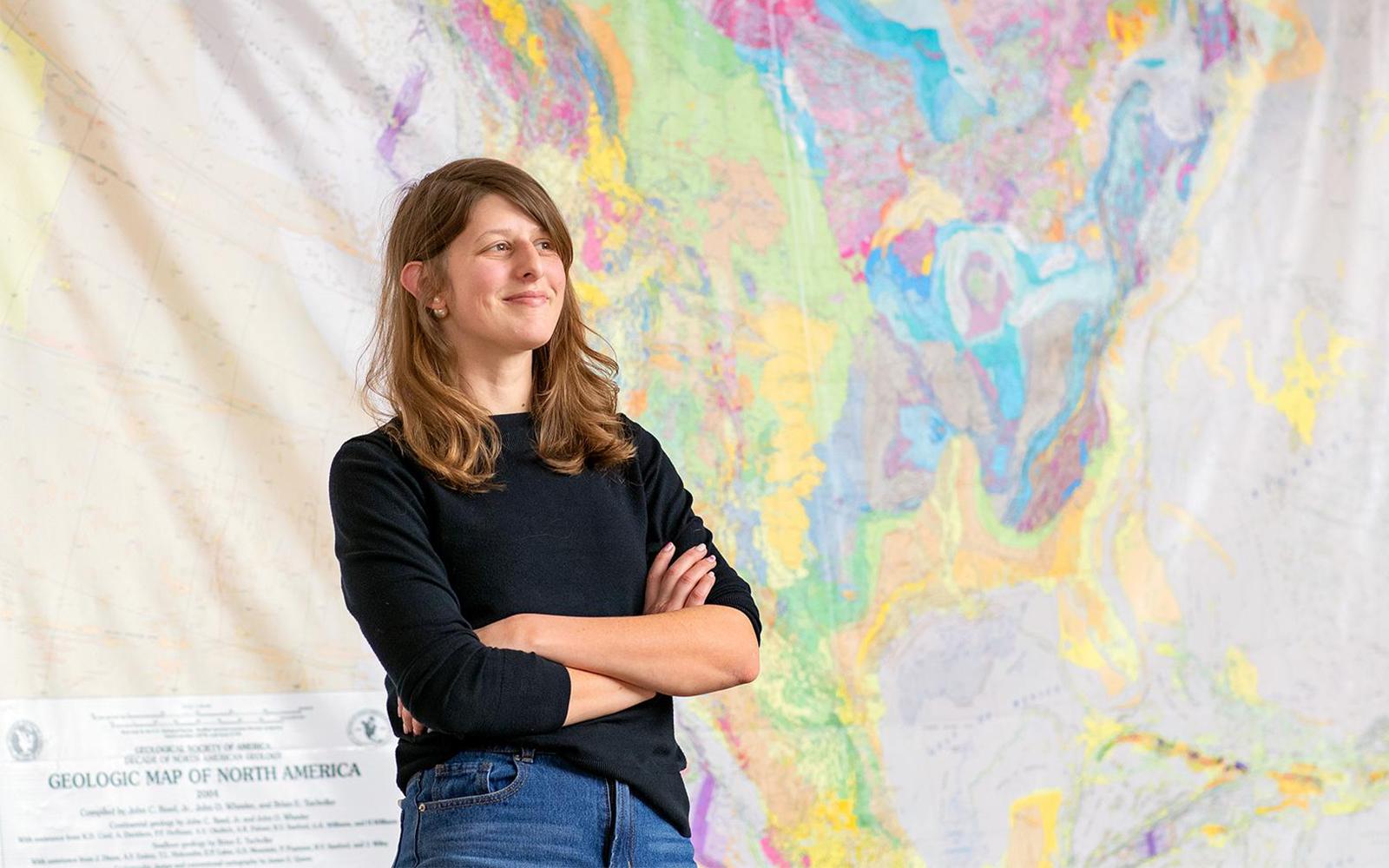
Dr. Page Quinton
The Maritimes Basin contains thousands of feet of Devonian-Permian (about 419 to 251-million-year-old) sedimentary rocks of global significance. These strata comprise two UNESCO World Heritage Sites, have supported more than 200 years of resource-based economic activity, and have yielded important insights into Earth's organisms, ecosystems and evolutionary patterns.
“The rocks that we will be working on in Atlantic Canada provide a remarkably detailed and complete record of life fully conquering the terrestrial realm. Specifically, these rocks contain things like trackways of early amphibians, skeletal material from the oldest unequivocal reptiles, the first land snails, spectacular fossilized forests, the oldest evidence of parental care in synapsids (mammals and their extinct mammal-like ancestors), and the first evidence of coordinated movement of groups of organisms across the landscape,” Rygel said. “All of these things happened in or adjacent to wetlands that could have been fresh, brackish, or marine … we have no idea. Geologists have been wondering about the chemistry of these wetlands for nearly 200 years, and I’ve been thinking about it for over 25 years.”
Despite the importance of these rocks, fundamental questions about water chemistry during their deposition remain unanswered. This research will identify intervals that were influenced by marine waters and provide new information about the conditions that shaped the evolution of plant and animal life on land and the nature and distribution of economic resources in the basin.
“Traditionally, understanding how salty the waters were requires finding certain types of fossils. Despite nearly 200 years of looking, we’ve not found more than a handful of useful fossils. It could be that we’ve just not found them yet, it could be that something about the water chemistry made it difficult for certain types of life, or maybe the conventional approaches don’t work there. Rather than hoping we get lucky and finding the right kind of fossils, the new geochemical techniques that we will use will allow us to analyze the rocks directly and determine the chemistry of the waters that they formed in,” Quinton said.
The project will also provide paid hands-on research experience for undergraduate students, as well as teaching and research experience for future K-12 Earth science teachers—giving SUNY Potsdam undergraduates the opportunity to take part in high-impact practices.
“We will have our students participate in every aspect of the research process and operating as a research team will be great preparation for graduate school or the workforce. This experience will make them more competitive for what comes next because it will provide them with direction about what kinds of projects (field-based, lab-based, or both) they are interested in pursuing,” Rygel said. “These kinds of experiences allow students to take the theory they learn about in lecture and the skills they learn in lab and apply them to real world problems.”
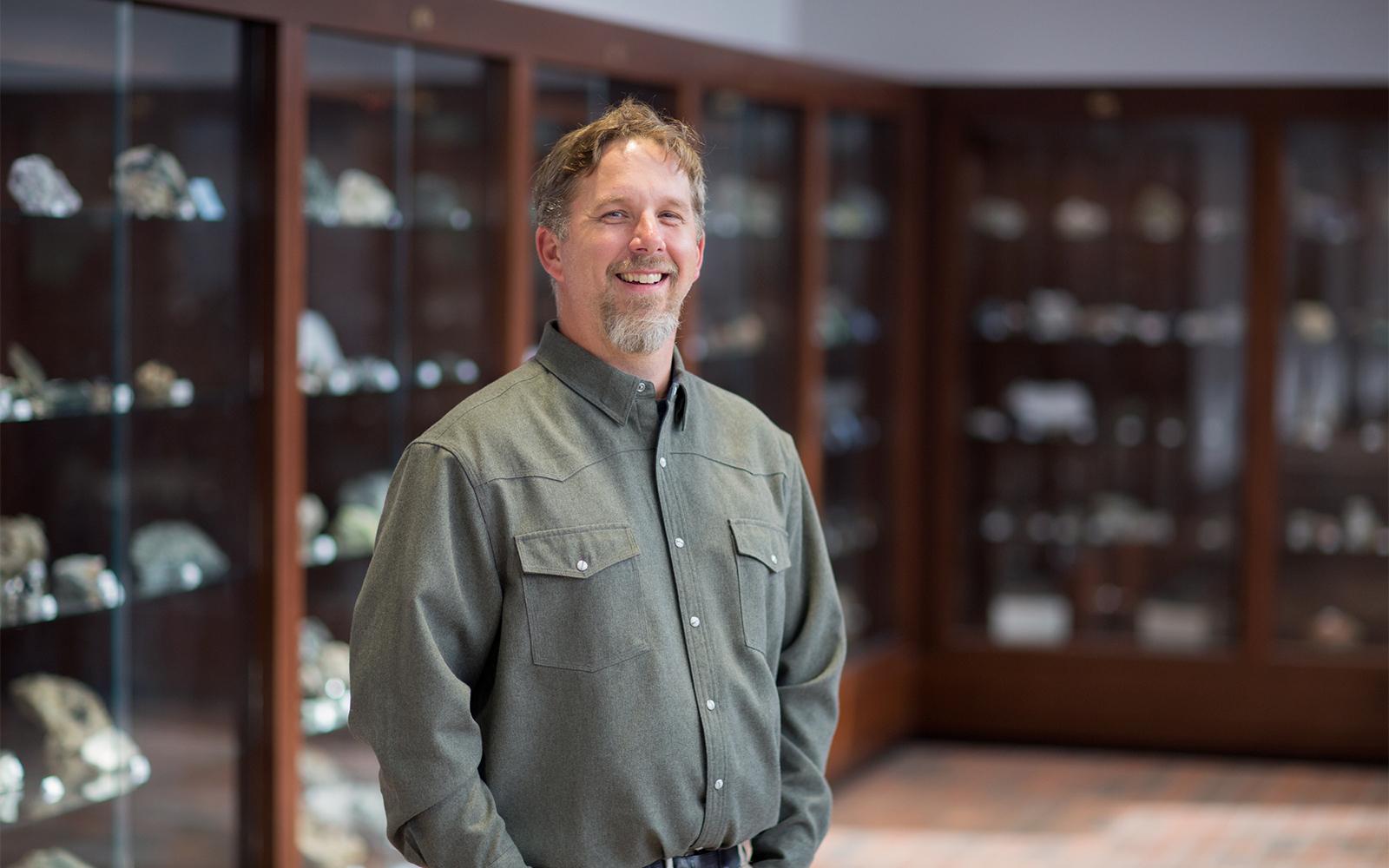
Dr. Michael Rygel
This is not the first NSF-funded collaboration for Quinton and Rygel. In 2021, they received a $370,113 NSF Research in Undergraduate Institutions grant to investigate Earth's ancient climate cycles while mentoring student researchers through field studies in Montana and Texas.
They have also collaborated on developing a campus Geoscience Garden, and co-authored an open educational research textbook to benefit their students.
Dr. Page Quinton is a stable isotope geochemist who studies the connection between the carbon cycle, ancient climate change, and major mass extinction events. Research she conducted with colleagues at El Kef, Tunisia, received international attention when it was published in the journal Science in 2018. Recent work has included research focusing on the role of climate change in the dinosaur mass extinction event, understanding the impact of early land plants on shallow seas, and understanding the connection between sea level change and carbon cycling. This work has taken her to Australia, Canada and all over the U.S.
Dr. Michael Rygel has deep family ties to the steel mills and coal mines of western Pennsylvania, and his research focuses on understanding the Paleozoic-aged rocks that these industries were built on. Specifically, he is a sedimentologist and stratigrapher who specializes in understanding ancient environments. His past research projects have focused on outcrops in the coal-bearing rocks in the Appalachian Basin in Pennsylvania and West Virginia, and the Maritimes Basin in Atlantic Canada, as well as coeval ancient glacial deposits in southeastern Australia.
SUNY Potsdam’s Department of Earth and Environmental Sciences prepares students for in-demand careers in the sciences, or for further study on the graduate or professional level. The department offers majors in environmental science and geology, including an option leading to geologic licensure, with a strong focus on both lab and field experience. SUNY Potsdam’s location in the St. Lawrence Valley near the Adirondack Mountains provides a natural laboratory for students.
About SUNY Potsdam:
Founded in 1816, The State University of New York at Potsdam is one of America’s first 50 colleges—and the oldest institution within SUNY. Now in its third century, SUNY Potsdam is distinguished by a legacy of pioneering programs and educational excellence. The College currently enrolls approximately 2,500 undergraduate and graduate students. Home to the world-renowned Crane School of Music, SUNY Potsdam is known for its challenging liberal arts and sciences core, distinction in teacher training and culture of creativity. To learn more, visit www.potsdam.edu.