
SUNY Potsdam Biology Professor Emeritus William Romey Releases Book, ‘The Tonga Letters: Peace Corps in the South Pacific’
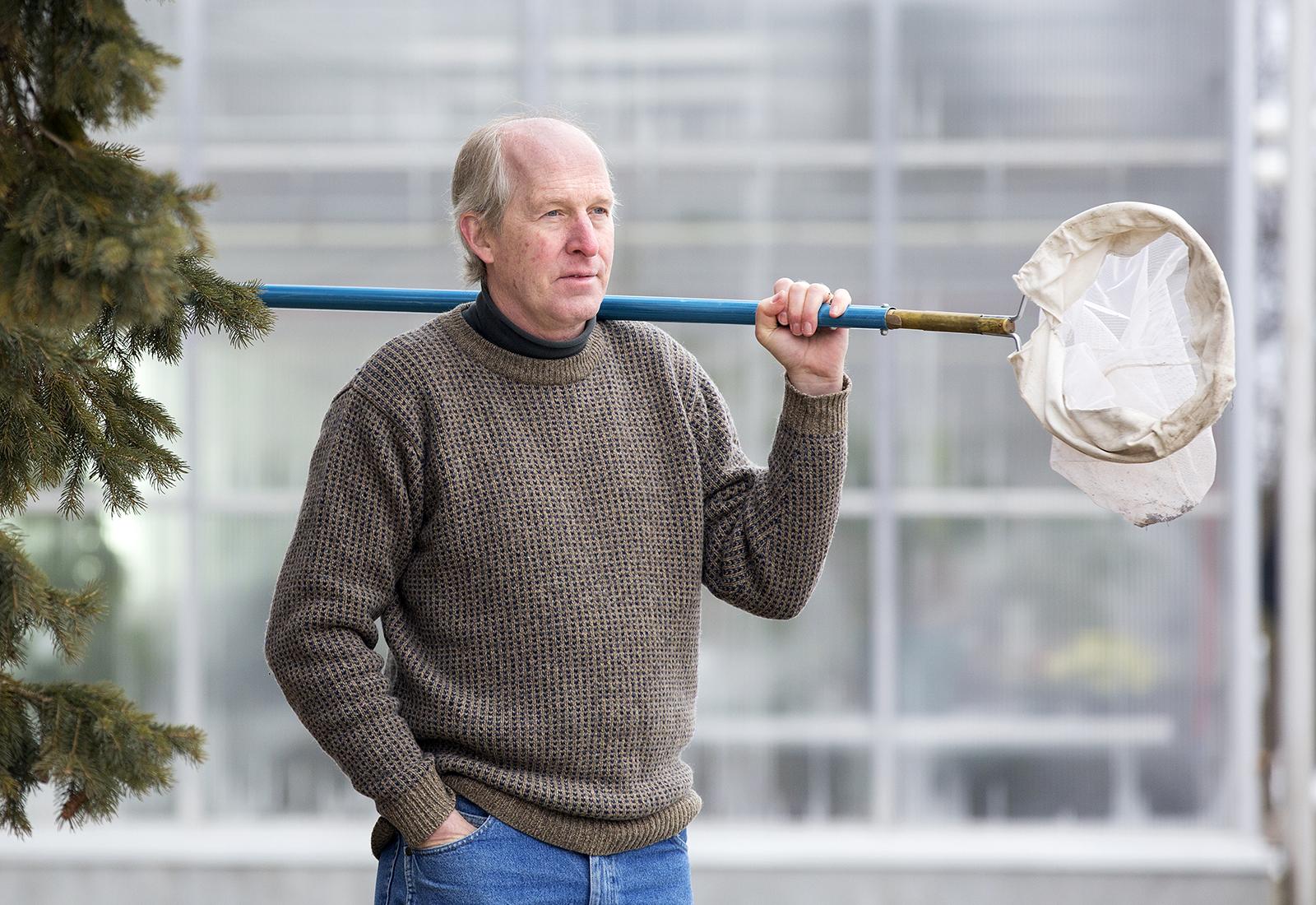
SUNY Potsdam Biology Professor Emeritus Dr. William Romey has published “The Tonga Letters: Peace Corps in the South Pacific.”
SUNY Potsdam Professor Emeritus of Biology Dr. William L. Romey recently published a book, “The Tonga Letters: Peace Corps in the South Pacific,” available now on Amazon as a paperback or e-book.
The book centers on the author’s experience in the Kingdom of Tonga, a group of traditional Polynesian islands, where he lived for two years, working with the Peace Corps. This book, based on letters home, describes close encounters with sharks, whales and the King.
The then-24-year-old author described teaching high school biology (in Tongan) in the day, and at night learning to drink kava and spearfish on the reefs. The letters detail harrowing experiences on outrigger canoes, rickety sailboats, dubious ferries and the occasional modern yacht, as he explored many of Tonga’s Islands, as well as Fiji and New Zealand. Each week’s letters detailed these adventures, the Tongan culture and the role of the Peace Corps.

Dr. William L. Romey is a professor emeritus of biology at The State University of New York at Potsdam, having retired in 2019. After earning his undergraduate degree in biology at Indiana University Bloomington, he was a Peace Corps Volunteer on a remote island in the Kingdom of Tonga (in Polynesia) for two years, teaching and developing labs for high school in the Ha’apai group of islands. After that, he completed a master’s degree in marine biology at the University of Rhode Island, and a Ph.D. in animal behavior at Binghamton University. From there, he came to SUNY Potsdam, where he taught courses including Animal Behavior, Freshwater Biology, Invertebrate Biology and Winter Ecology. His research and publications in scientific journals covered a variety of subjects, including deep sea clams, bee diversity, grouping behavior of insect swarms, and mathematical models of fish schools.
SUNY Potsdam’s Department of Biology is grounded in the principle that every student should receive a quality education fitting their interests. Undergraduate research is embraced, with opportunities for hands-on learning in the fields of ecology, evolutionary biology, cell and molecular biology, environmental science, the health sciences, and anatomy and physiology. The department also operates the Wagner Institute for Sustainability and Ecological Research. For more information, visit www.potsdam.edu/academics/AAS/biology.
About SUNY Potsdam:
Founded in 1816, The State University of New York at Potsdam is one of America’s first 50 colleges—and the oldest institution within SUNY. Now in its third century, SUNY Potsdam is distinguished by a legacy of pioneering programs and educational excellence. The College currently enrolls approximately 2,500 undergraduate and graduate students. Home to the world-renowned Crane School of Music, SUNY Potsdam is known for its challenging liberal arts and sciences core, distinction in teacher training and culture of creativity. To learn more, visit www.potsdam.edu.