
Searching for a landing zone for their next extraction, the mosquitoes find Aaron Barragan ’29 and Ellie Barbolt ’27 immediately as they enter the woods. A quick misting of bug spray and a well-timed swat keep the insects at bay as the two students get down to business—collecting the very creatures buzzing around their heads for research and disease testing.
Under Barbolt's mentorship, Barragan has spent the summer learning the science behind mosquito-borne disease transmission, mastering field collection techniques, and developing an eye for identifying one species from another.
Part of an integrated surveillance program for monitoring mosquito-borne zoonotic diseases, their work is generating valuable data about the presence of pathogens ranging from West Nile Virus (WNV) to Eastern Equine Encephalitis (EEE) in mosquito populations across Northern New York.
Paid Internships
Two distinct programs are funding their work this summer: the Educational Opportunity Program’s High Impact Practice (HIP) initiative and the Presidential Internship Program (PIP).
Barragan is one of six Educational Opportunity Program (EOP) students enrolled in the HIP program—a SUNY initiative expanded this year to include 850 new internships for students from low-income backgrounds. The summer program at SUNY Potsdam provides participants with a stipend, three credits of tuition funding, and additional support to offset housing and food costs.
“The focus of these internships is exposure to workplace environments, competency building, and early engagement with the internship experience—along with being mentored by a student in the Presidential Internship Program. Mentorship became a key piece for this summer's internship cohorts,” said Max Grube, the internship coordinator for SUNY Potsdam’s Lougheed Center for Applied Learning.
For Barragan, that has meant trading a summer job back home for hands-on scientific research, while building credit toward his degree in biomedical sciences.
“If I were at home, I would be working a job that has nothing to do with my career. I would be getting money, but I wouldn’t be getting the experience. I'm building my professionalism and developing my critical thinking skills," he said.
Supporting his professional development is an experienced team of students—Mosquito Surveillance Coordinator Chase Bond ’26, PIP intern Tucker Siddon '27, and PIP intern Barbolt—the latter of whom has stepped into a leadership role with Barragan this summer.
“PIP students had the option of taking on a mentorship role this year, and I decided it would be a good idea to gain some leadership and communication skills,” Barbolt said. “It’s been very fun. I’ve learned a lot about teaching and working with people, to break down subjects so they’re more digestible.”
Now in its second year, the PIP provides substantial funding for high-achieving students to pursue hands-on research and projects that benefit organizations around the North Country. For the mosquito surveillance project, the work directly supports the St. Lawrence County Public Health Department's efforts to better understand viruses that may pose a threat to public health in the region.
In the Field
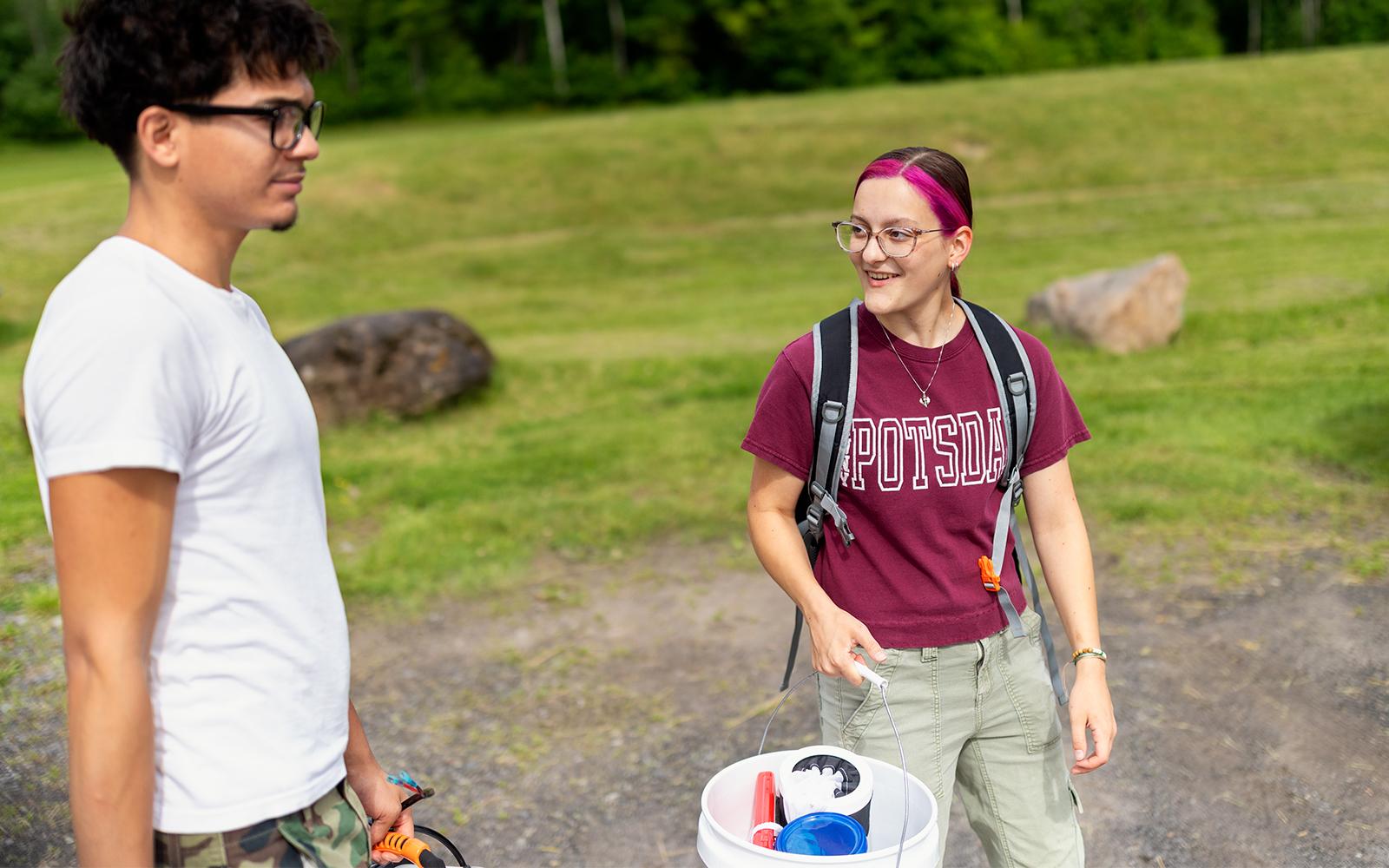
That’s where Barbolt and Barragan step in, carrying out their daily routine at four research sites in St. Lawrence County: the Upper and Lower Lakes Wildlife Management Area (Canton), Fish Creek WMA (Heuvelton), Clarkson University (Potsdam), and Brasher Falls State Forest.
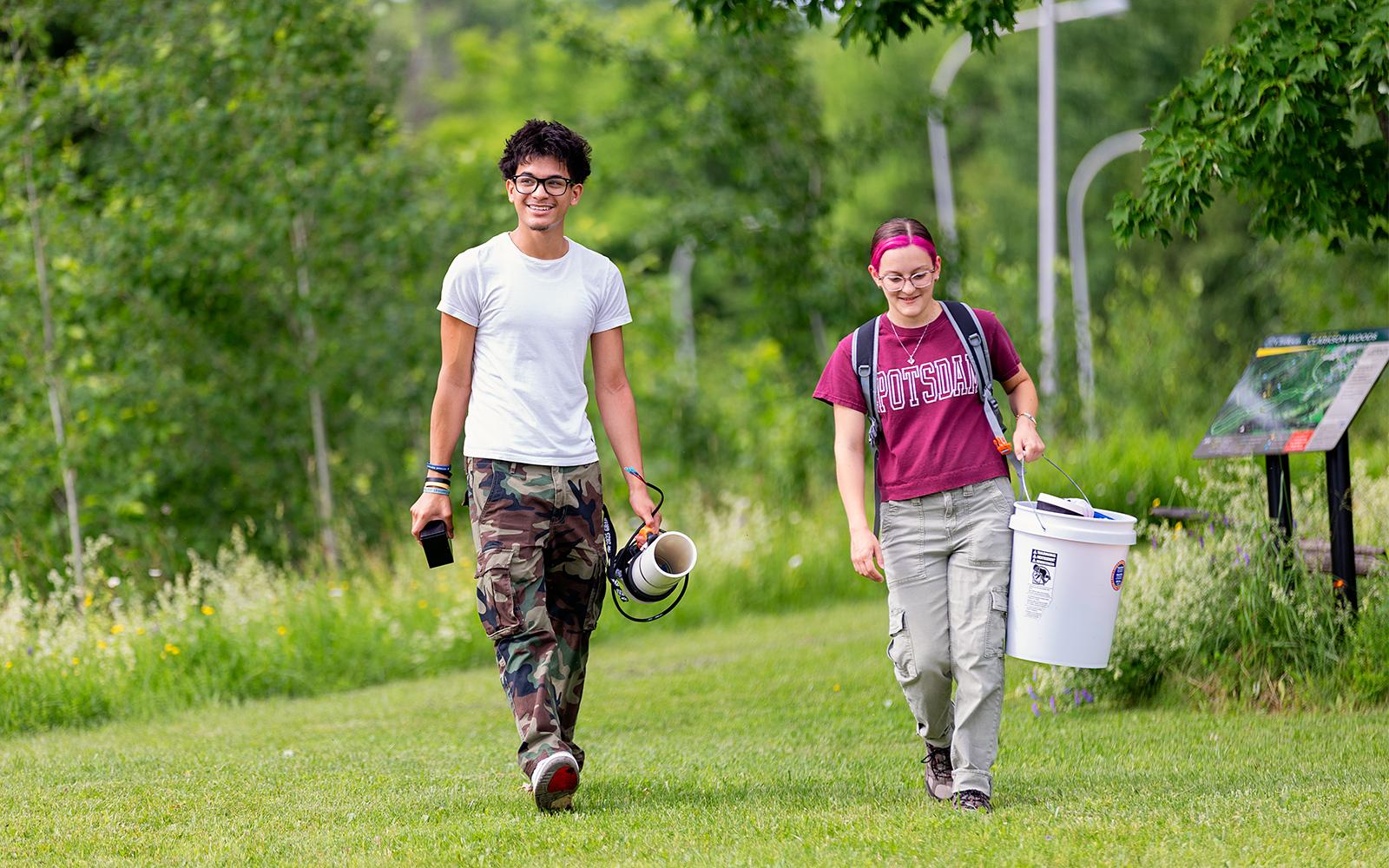
After meeting in the Stowell Hall lab first thing in the morning, the pair collect their supplies and venture out into densely forested terrain of Northern New York to service three different types of traps, including a Centers for Disease Control (CDC) light trap. Baited with carbon dioxide from sublimating dry ice, a battery-powered light, and a fan, the traps lure mosquitoes into a netted enclosure where they wait for students to arrive.
“Our light traps have the most variation. They get us a lot of males, which we’re not really looking for. Only female mosquitoes drink blood, so they’re the only ones carrying bloodborne diseases. All of the males get sorted out in the lab,” Barbolt said.
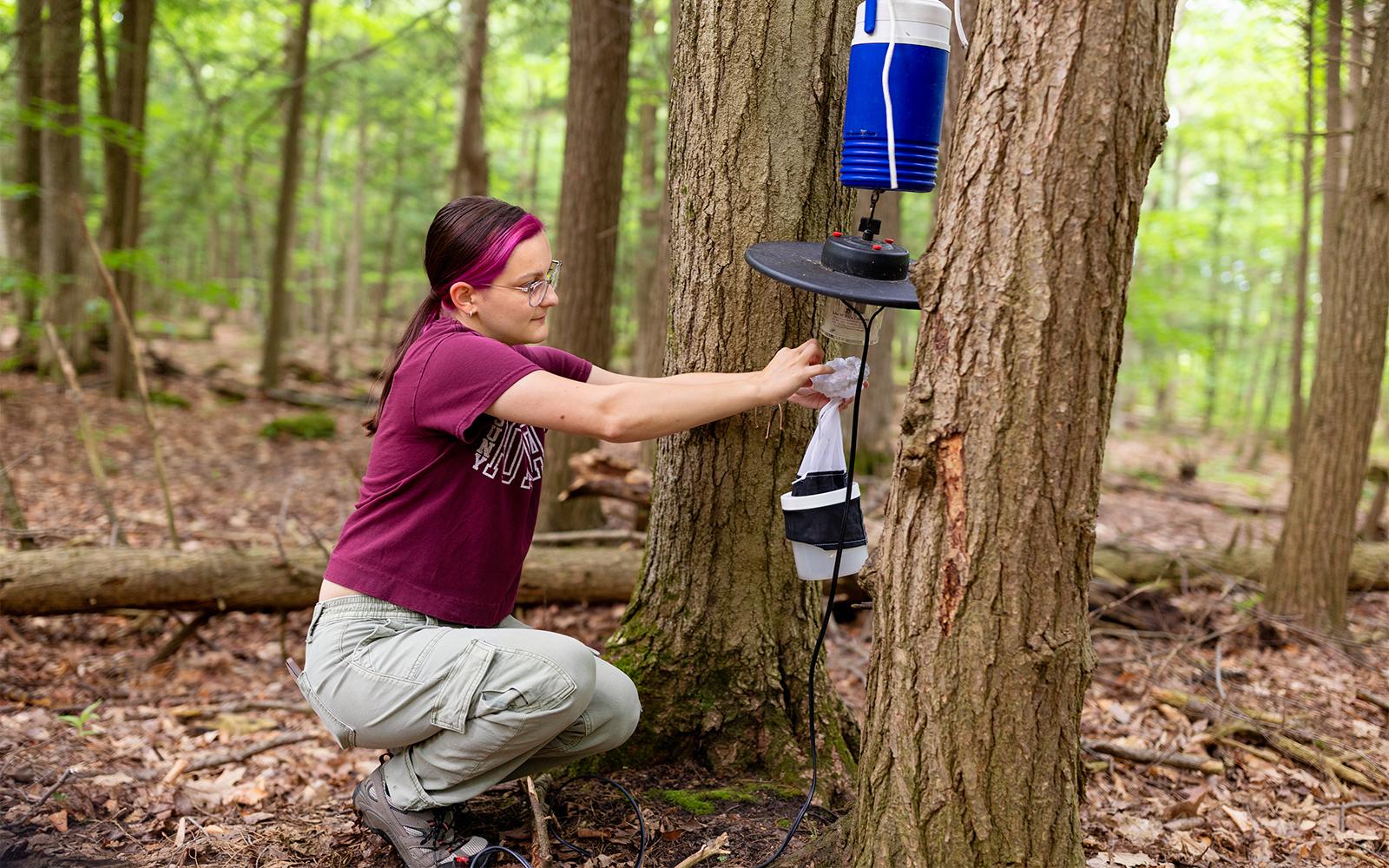
Barragan deploys a handmade aspirator—essentially a vacuum—to remove mosquitoes from diurnal resting boxes, artificial shelters that attract mosquitoes with their cool, dark, humid conditions. He flips a switch on the battery-powered motor, drawing insects into a net at the back of the device. Then the pair examines a gravid trap: a bucket filled with stagnant water designed to attract egg-laying females.
“The resting boxes are more targeted to the females, and the gravid traps give us almost entirely females, they’re usually pregnant, carrying eggs,” Barbolt said.
For Barragan, who grew up in New York City, the experience has been unlike anything he’s encountered before. Beyond the research itself, spending mornings immersed in nature has made a lasting impression.
“I always tell Ellie that being from the city, I never interacted with nature. The most I have seen is Central Park. When I’m out in Upper and Lower Lakes, it’s deep in the woods—it’s a connection with nature that I’ve never had. I feel more awake than I am when I’m in the city.”
Aedes, Culiseta, Culex and Coquillettidia are just some of the scientific names that Barragan has learned this summer—four genera encompassing 25 different mosquito species captured at their research sites.
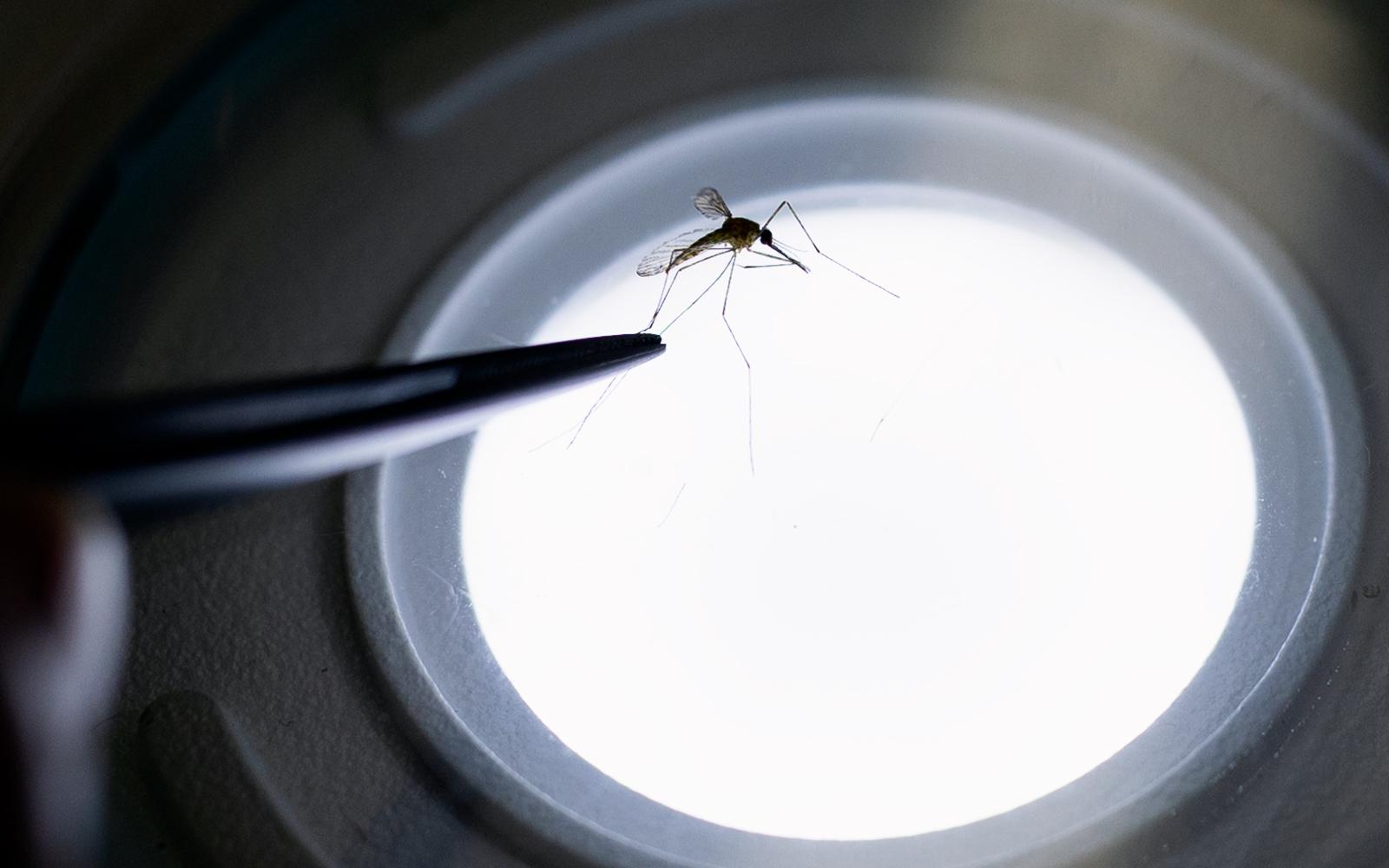
“He had a lot to learn in the beginning,” Barbolt said. “We started off talking about mosquito anatomy and disease transfer, and slowly getting into how to use the traps successfully. Sorting is probably the most daunting task, learning how to use the manual and find very small details on these mosquitoes.”
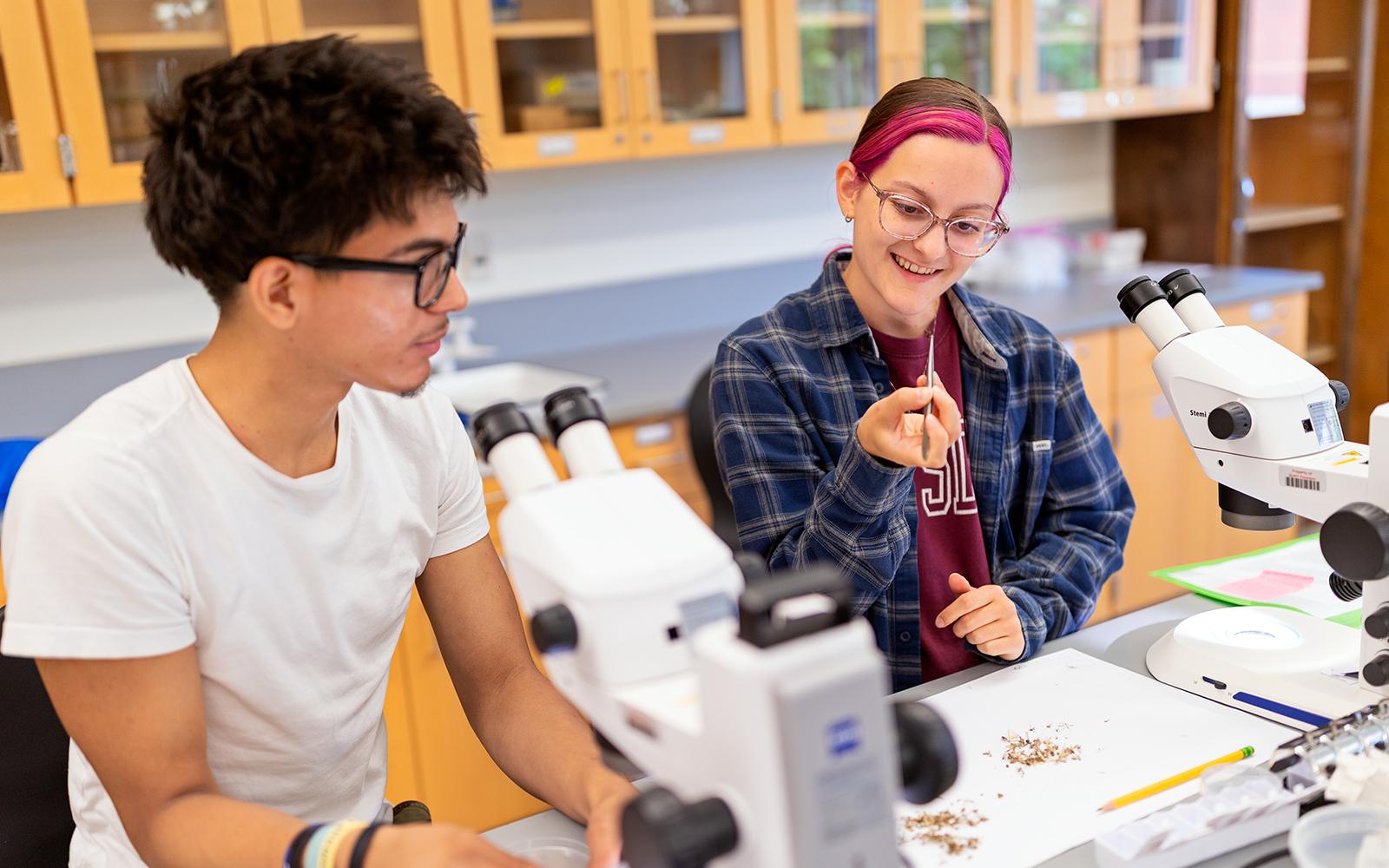
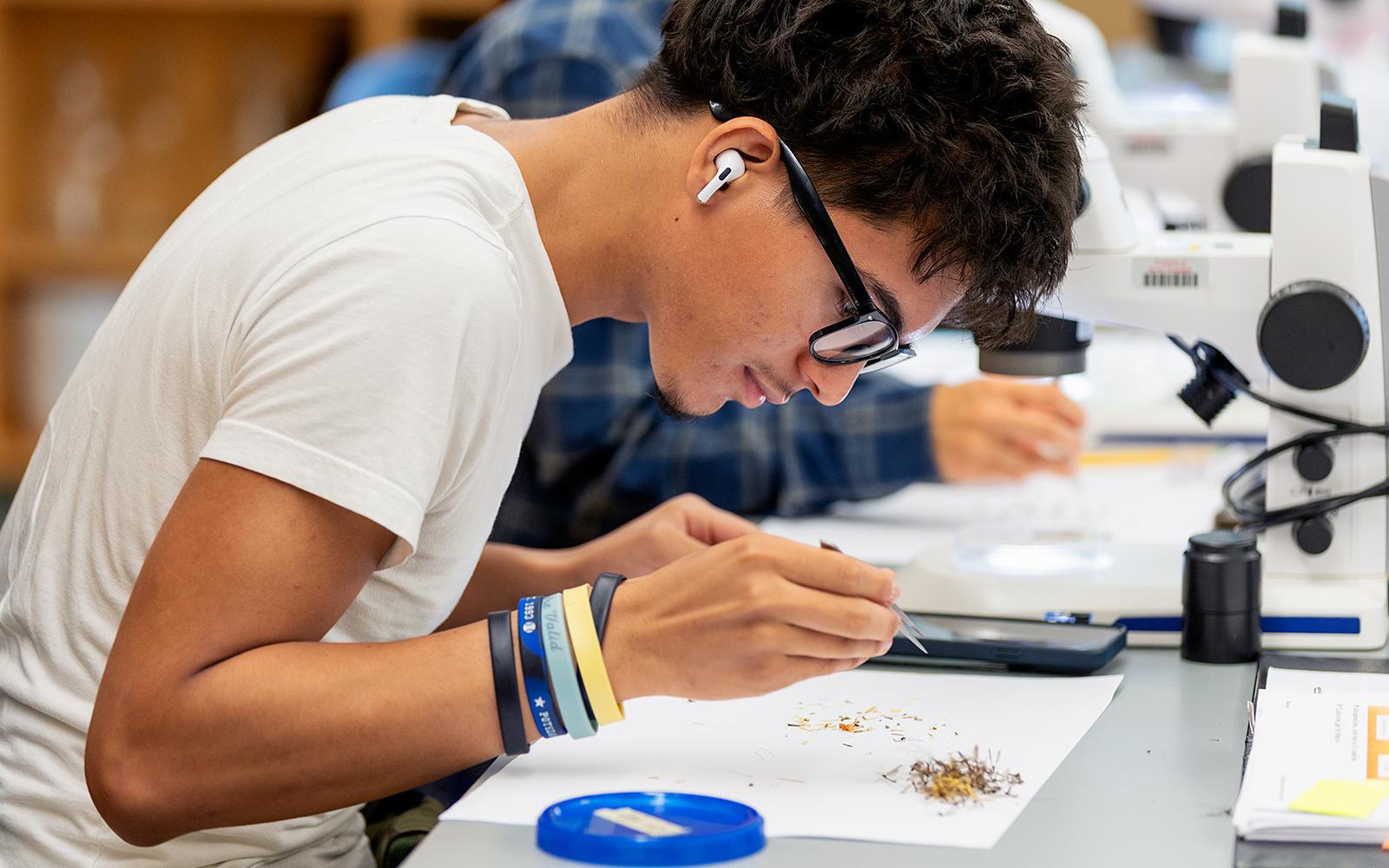
Back in the lab, Barragan and Barbolt examine their catches under microscopes set side by side, using forceps to separate the males and females and one species from another.
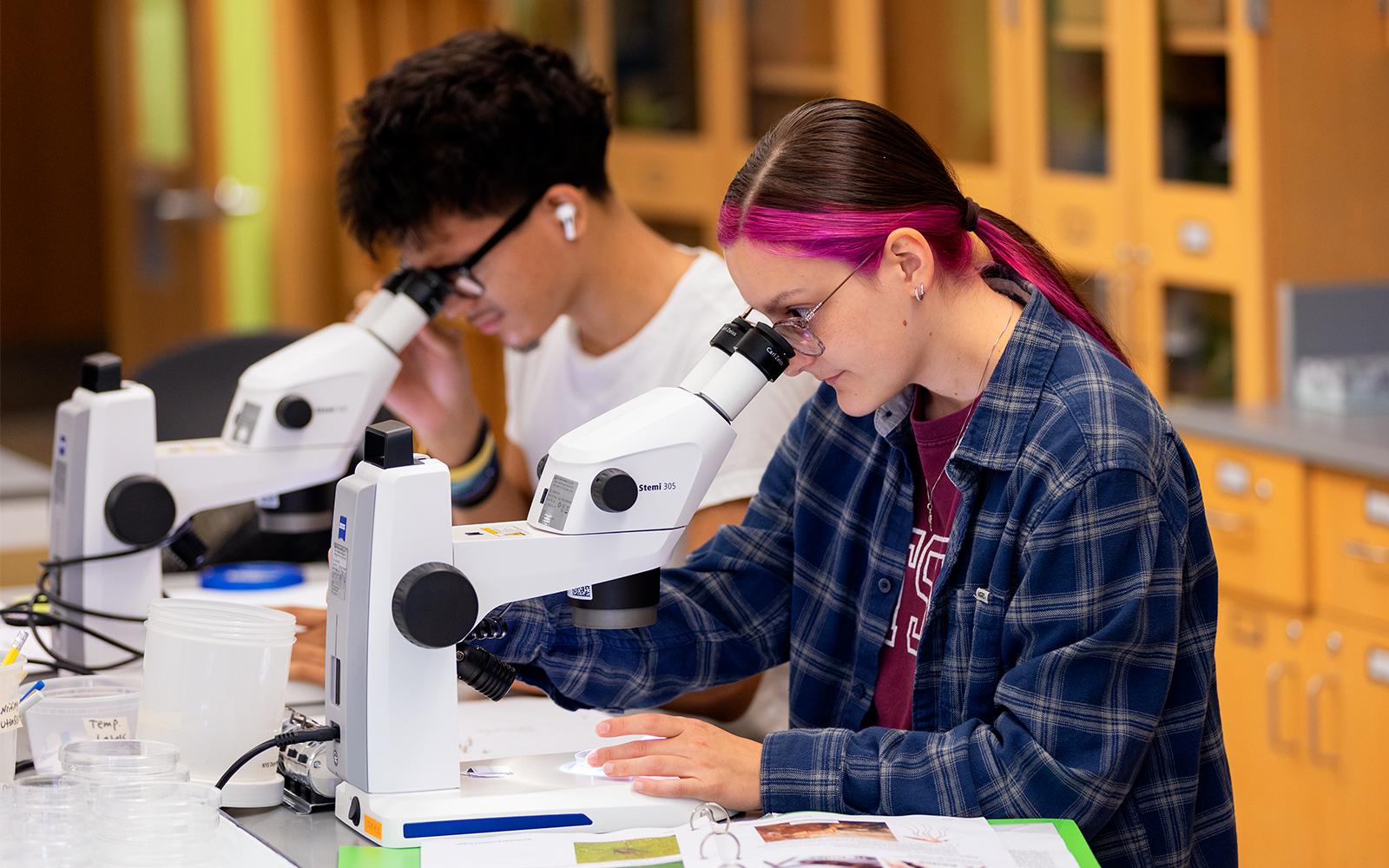
“I haven’t had any prior lab experience at all, and I haven’t used microscopes, so having Ellie as my mentor, with all her experience, has been the best advantage for me. I still haven’t mastered the sorting of mosquitoes, but every time I need help I always just ask my crew since they’re experts. It helps me learn, and it betters my communication with others,” Barragan said.
Professional Development
Running alongside the fieldwork, Grube has built twice-weekly professional development sessions into the summer program, bringing in guest speakers to address topics ranging from career development and technology to teamwork and communication.
He said that in addition to reflecting on the internship experiences during these events, he also explores competency development with students, built around the NACE Career Readiness Competencies. “It's been fun to build this as a kind of curricular component within the summer programs, and I can't wait to see how it evolves moving forward,” Grube said.
“The creation of the EOP Internship Program helped us shape a mentee-mentor model,” Grube said. “It helps that the EOP interns are earlier in their college journey, while the PIP interns have more experience (and potentially internships) under their belt to serve as a leader.”
For Barragan, the experience has added up to more than fieldwork and lab hours—it's given him a model for how knowledge gets passed down.
“I never thought I would have built this relationship with Ellie,” Barragan said. “I find mentorship in general very useful. I learn a lot of new things from people who have experience, and it helps me pass that information on to others—the same way, people have passed it on to me.”
Article and photos by Jason Hunter