
From handmade mallets to full-scale restorations, one student is redefining percussion repair
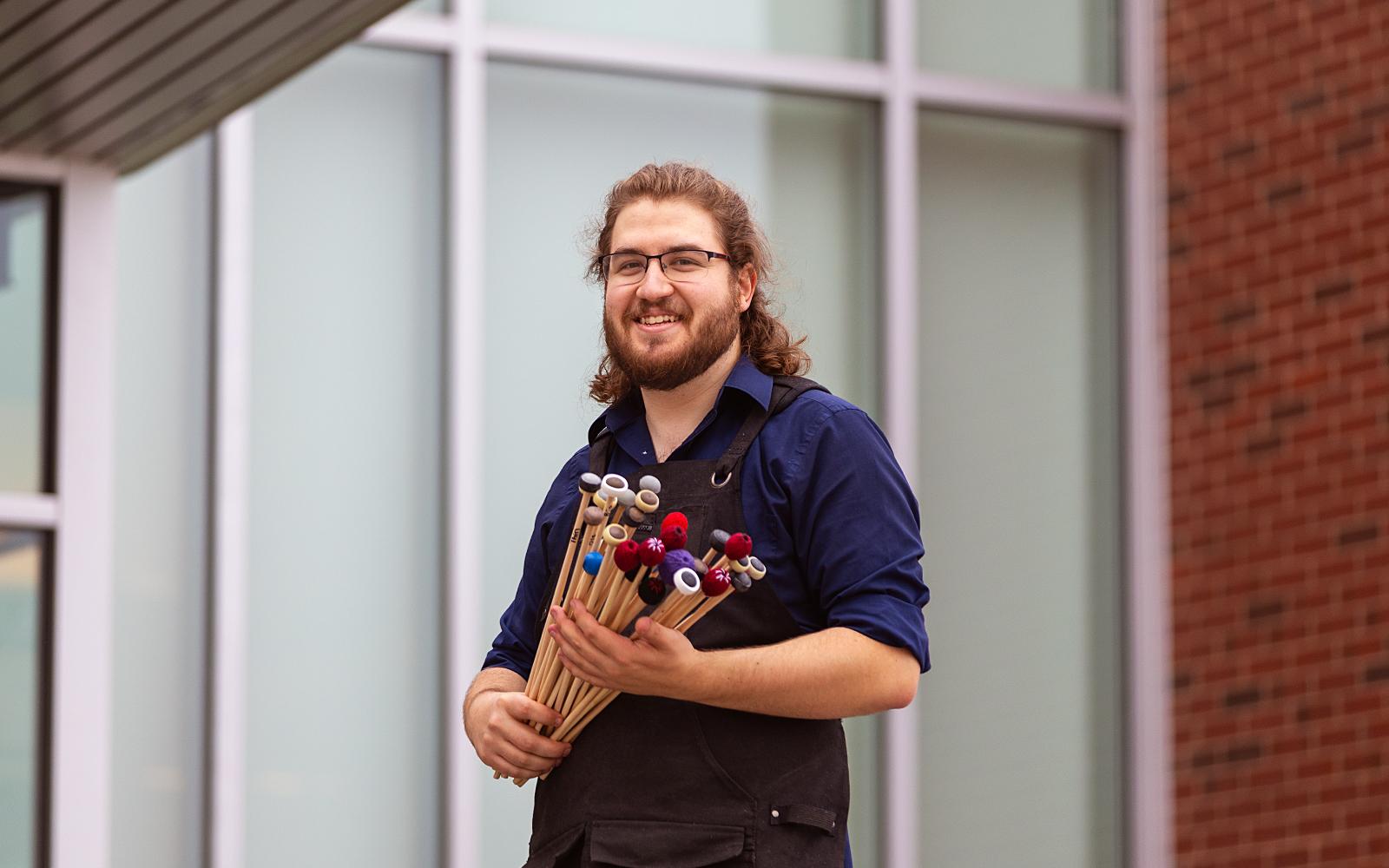
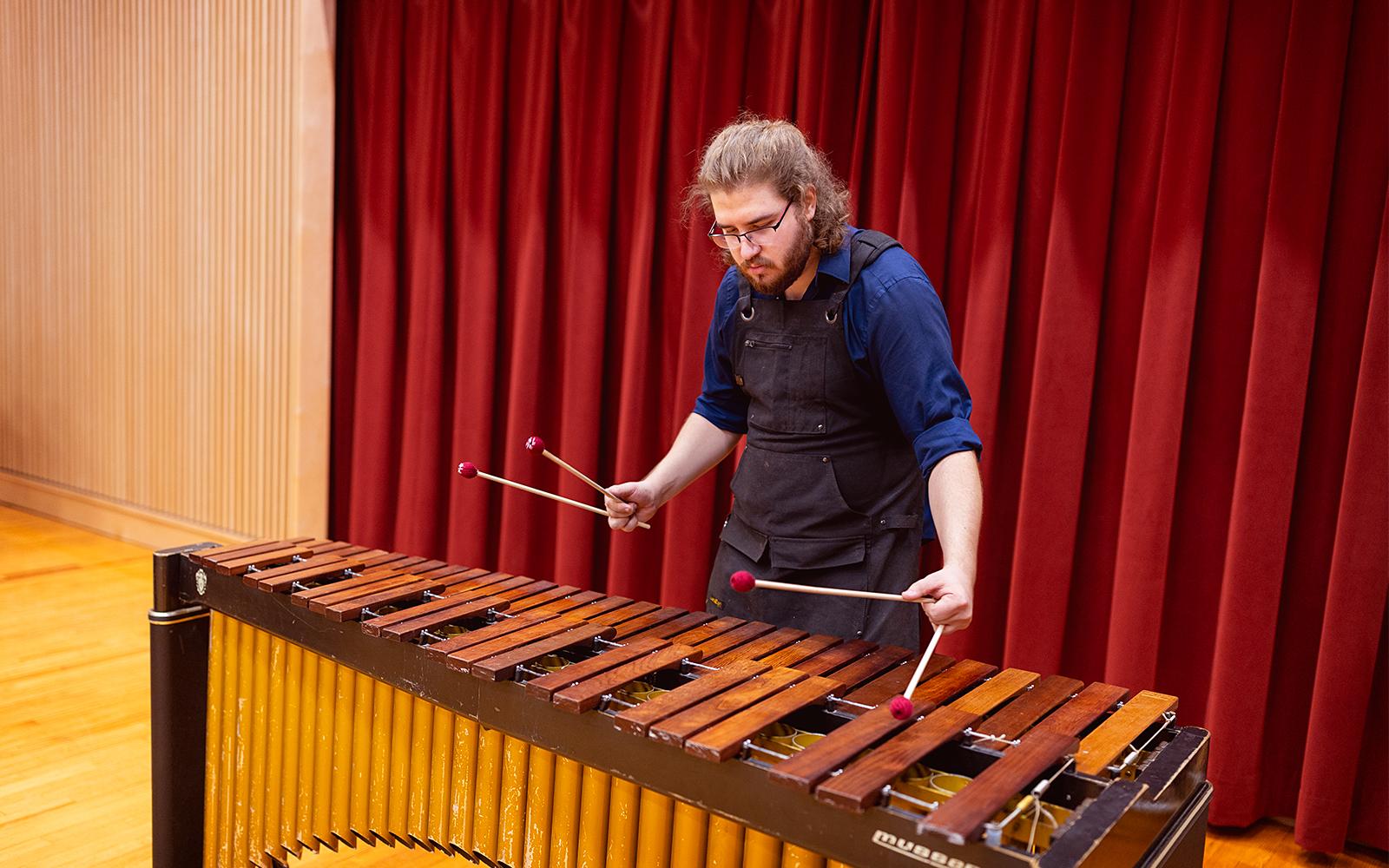
As he rapidly winds yarn tightly around the end of a marimba mallet core, Brandon Phelps ’26 is building far more than a set of percussion tools—he’s creating access, sustainability and opportunity for young musicians. A music education major at The Crane School of Music, Phelps has spent the last two years refining the art of hand-making marimba mallets while developing a comprehensive “cookbook” to help elementary and high school music programs build their own.
His Presidential Scholars Project aims to empower teachers and students to repair and create percussion equipment at a fraction of the cost.
“I’ve always had a huge interest in mallet and sound design on percussion. Being able to create my own has been a dream,” Phelps said.
Phelps has experimented with techniques for crafting everything from beginner-friendly mallets to advanced, performance-quality sets. As he works, he documents his process, creating step-by-step instructions for teachers and students who will be using the Marimba Mallet Cookbook in the future.
“The whole idea of the project is that we will have a recipe book for mallets for different levels. We’ve done all the research to help people make a full set of marimba mallets, from hard to soft with the type of yarn, and how to wrap it. It tells you exactly what you need to do,” Phelps said. “Most professional mallets are upwards of $50 to $60, but we can build similar quality and sounding mallets for between five and eight dollars. This price difference could make or break a high school band’s budget.”
This spring, Phelps will complete his student teaching placements in Northern New York—and he’s bringing his craftsmanship with him. Along with leading music classes, he plans to create hands-on mallet-building workshops for students.
“I’m excited for student teaching, to help students learn about mallet making and sound design, and help them become more independent in the stuff they’re doing musically,” he said.
A Growing Passion for Repair and Restoration
Phelps has tackled one project after another at Crane. In Spring 2025, he received a $500 Kilmer grant through the Lougheed Center for Applied Learning to focus on general percussion repair. He fixed cracked marimba bars, refurbished snare drums, restored drum sets and refreshed countless percussion instruments used by Crane students—purchasing glue, sandpaper, wood fill, and cleaning supplies to support the work.
That summer, Phelps took on his largest restoration project yet: reviving 13 old timpani that had been stored in Crane’s basement for decades. With space limited and newer drums already in use, the College planned to clear out the older instruments. Phelps saw potential instead of waste. After receiving approval from the Dean and securing an additional Kilmer grant, he began the restoration alongside classmate Jared Emerson.
“When Crane gets a new set, they get rotated out and put in the basement. We have five sets in use right now, and we don’t need any more. I went to the facilities manager, and I said, ‘Hey, can we fix these up and send them somewhere so they can be used?’”
The pair hammered out dents, polished the kettles, repaired drum skins and restored all 13 timpani. Now, the once-forgotten instruments are ready to return to music classrooms—either at another SUNY campus or at a local high school.
Learning Every Corner of the Craft
Alongside his Presidential Scholars Project, Phelps is completing two Kilmer Labs this semester—studying piano tuning with senior piano technician Ryan Mix, and orchestral string repair with Crane’s new instrument technician, Samson Flancbaum. He also works as a paid student technician, repairing brass and woodwind instruments and overseeing piano regulation.
“I’ve loved my time at Crane. I found what I wanted to do with my career."
His evolution from music educator to instrument repair specialist traces back to his childhood in Copenhagen, NY, where he grew up helping his father raise cattle and learning to use a wide range of tools.
“I have an affinity for tools and how things are made. I can use the skills I developed my whole life in the music industry, and getting to apply those skills to music and instruments is something I’ve loved,” he said.
Looking Ahead
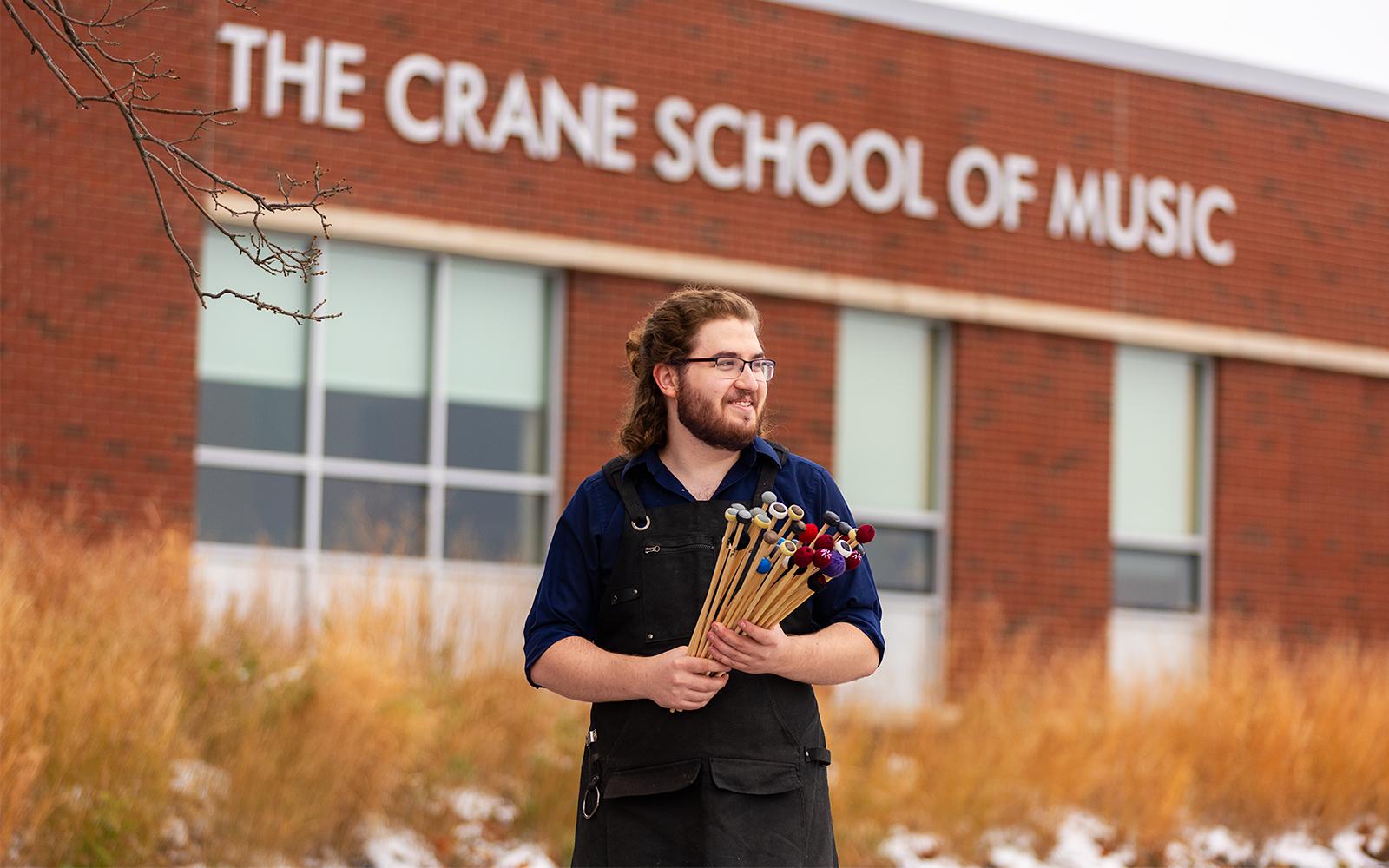
After he graduates with his music education degree in May 2026, Phelps plans to return to SUNY Potsdam to pursue a master’s degree in Curriculum and Instruction while continuing an apprenticeship in instrument repair. Ultimately, he aims to open his own repair shop and collaborate with local schools to offer hands-on workshops.
“Because of the last year, I want to do instrument repair full time, not because I don’t love teaching, but I just absolutely love fixing instruments and doing research,” he said. “I’m going to be working in the instrument lab at Crane for the next two years in grad school, and finish a repair apprenticeship with Samson, so that I can open a shop when I’m done.”
“I’m really thankful for all the time I spent at Crane.”
Article and Photos by Jason Hunter